


Heat pump water heater rebates 2025 can save you thousands if you move fast and follow the rules, but real pitfalls lurk that could block your payout. Learn what’s proven, what steps matter, and how to claim every possible dollar—before deadlines close for good.
Key Takeaways
- The 2025 federal 25C tax credit covers 30% (up to $2,000) of a qualifying heat pump water heater’s cost but ends December 31, 2025.
- California and utilities offer extra rebates, but eligibility, documentation, and timing are strict—and missteps mean you could miss out.
- You must subtract local rebates before calculating your federal tax credit, use licensed installers, and keep every receipt and manufacturer ID for IRS Form 5695.
- Understanding 2025 Heat Pump Water Heater Rebates: What Matters
- Step-by-Step: Getting Your 2025 Rebates and Tax Credits
- Real-World Pitfalls and Advanced Analysis
- Conclusion
- Frequently Asked Questions
Understanding 2025 Heat Pump Water Heater Rebates: What Matters
The push to adopt energy-efficient water heating is real, and federal and state programs for heat pump water heater rebates 2025 are nearing their final stretch. The centerpiece: the 25C Energy Efficient Home Improvement Credit. It lets you claim back 30% of your heat pump water heater project (up to $2,000), provided your unit is ENERGY STAR-certified, installed by a licensed pro in a conditioned space, and put in by the end of 2025.
Renters in existing homes, homeowners, and secondary homeowners all qualify. But new construction, pure vacation homes, and rentals not primarily occupied are out. There’s no income limit on the federal credit. It’s tax-based, not upfront—claimed annually via IRS Form 5695. For California, new state incentives start July 15, 2025, to replace the expiring federal funds, though dollar amounts and specific timelines depend on local programs and may have earlier cutoffs or limited funds. Elsewhere, most significant rebates are at the utility level, typically $50–$250, stackable with the federal credit when available.

The rules are strict and documentation heavy: you’ll need contractor certification, ENERGY STAR proof, detailed invoices, the manufacturer’s Qualified Manufacturer ID (QM ID), and paperwork for every rebate you’re stacking. Missing or misordering these steps can cost you the rebate—especially as deadlines approach and funds run out.
Don’t forget: you must subtract all utility or state rebates from your total project cost before calculating your 30% tax credit. If you get the math wrong, the IRS can reduce your credit or even flag your claim.
If you want your project to be truly energy smart, consider pairing a new water heater installation with other efficiency upgrades—like a smart thermostat upgrade—for bigger returns and lower energy bills.
Step-by-Step: Getting Your 2025 Rebates and Tax Credits
Securing heat pump water heater rebates and tax credits in 2025 isn’t rocket science, but success depends on following the right order and retaining key paperwork. Here’s the exact process to maximize your savings and minimize IRS headaches:
-
Confirm Eligibility Early.
- Must be your primary or secondary home (not a new build or unoccupied rental).
- Home must be an existing structure; new construction is ineligible.
- Choose an ENERGY STAR-Certified Heat Pump Water Heater. It must carry the latest certification—no exceptions.
-
Select a Licensed Installer.
- Installation must be in a conditioned (heated/cooled) space.
- Keep credentials and proof of license for your records.
-
Collect and Track Every Receipt.
- Split out equipment cost, installation labor, additional materials.
- Obtain the unit’s manufacturer QM ID (e.g., Rheem K3A8, A.O. Smith A5X5).
-
Apply for Local Utility Rebates First, If Offered.
- Amounts ($50–$250+) must be subtracted from your federal tax credit base.
- File post-installation, usually via online or mail-in forms (see current programs).
-
Claim the 25C Federal Tax Credit (Before Dec 31, 2025).
- Complete IRS Form 5695 (find full details here).
- Reduce your project cost by any local/state incentives to calculate 30% credit (max $2,000).
- Attach documentation: proof of payment, ENERGY STAR cert, invoice, QM ID, installer license, warranties.
-
Submit California or State Rebates if Eligible.
- California’s new 2025 program opens July 15 and may fill up fast (details here).
- Other states: check local programs—some first-come, first-served.
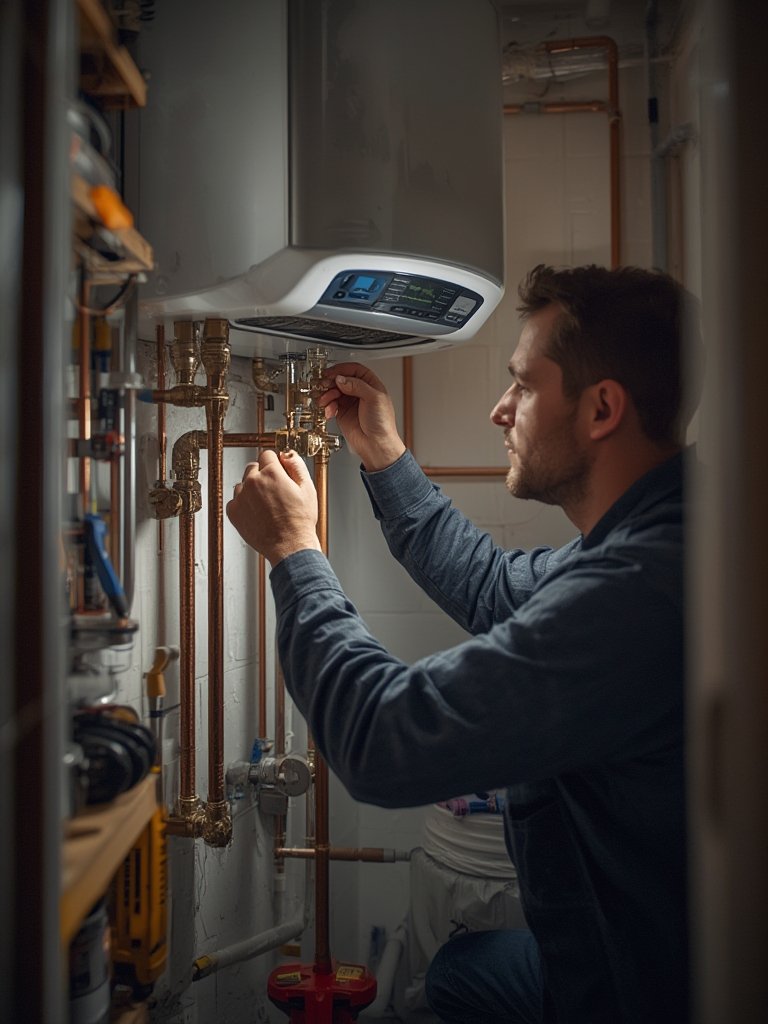
Documentation matters more than people realize. If your heat pump water heater is part of a whole-home energy upgrade, make sure the receipts and project scope clearly break out eligible water heater costs, or the IRS may deny the credit. For more on maximizing your home’s energy efficiency, see these easy kitchen upgrades and energy-saving hacks.
Trying to maximize every dollar? Stack rebates and credits, but the IRS specifically requires you to subtract every cash-back or check rebate from your total eligible amount before calculating your credit—leaving out a $250 utility rebate could cost you hundreds later.
Lastly, make sure to finish your installation and all paperwork before December 31, 2025, to guarantee federal eligibility. Many utility programs—and California’s next incentives—have tight fund limits and may close well before their posted deadlines if demand is high.
Real-World Pitfalls and Advanced Analysis
Hundreds of homeowners get tripped up every year by avoidable mistakes. While heat pump water heater rebates and credits in 2025 are generous, they come with detailed requirements. Here’s what usually goes wrong:
- Wrong Project Cost Calculation: Not subtracting state/util rebate amounts before applying for your federal tax credit can lead to audits or lower payouts.
- Ineligible Home Type: New builds, unoccupied rentals, or vacation homes without primary use are excluded, even if you bought qualifying equipment.
- Installer Mistakes: DIY or unlicensed installs disqualify you—licensed contractor paperwork is mandatory.
- Documentation Gaps: Forgetting receipts, ENERGY STAR certs, or the manufacturer QM ID can stall or void your claim.
- Missed Deadlines: Federal tax credit applies only to installations by December 31, 2025. Local rebates may “run out” before year-end if funding is exhausted.
| Step | Easy Path | Common Pitfall |
|---|---|---|
| Eligibility | Existing home, licensed installer, ENERGY STAR water heater | New build, vacation-only use, DIY install |
| Project Cost | Subtract local rebates, then calculate 30% | Apply 30% before rebates—IRS will claw back the difference |
| Documentation | Invoice, QM ID, ENERGY STAR cert, installer license, rebate proof | Lost receipts, missing ID/certification detail, incomplete forms |
| Filing Tax Credit | File IRS Form 5695 on time with all attachments | Miss filing window or submit incomplete paperwork |
| Program Fund Limits | Apply early, reserve utility/state rebate funds | Wait too long—funds or slots exhausted in busy markets |
Actual cost savings and payback periods vary, but heat pump water heaters generally cut electric water heating costs up to 70% compared to standard electric models. Upfront costs—often $2,500 to $4,000 installed—may dip well under $2,000 after all rebates and credits. Combining these upgrades with smart home energy tools can push actual payback under four years for many households, though real-world results depend on water use, local electric rates, and program funding.
If you have pets and want added comfort, check out these smart upgrades and durable furniture tips for hassle-free living with your furry friends.

Conclusion
The window for big heat pump water heater rebates 2025 is closing, with strict eligibility rules and paperwork demands. Avoid major pitfalls: stack all local and state rebates, subtract them before claiming your federal 30% tax credit, use licensed pros only, and keep every shred of documentation. Don’t miss the December 31, 2025 deadline—act now to lock in savings on your next hot water upgrade.
Ready to maximize rebates and pump up your home’s efficiency? Double-check your eligibility, find local programs, and start contacting licensed installers. For more energy-smart tips, explore our smart thermostat guide or see how easy upgrades can transform your kitchen with peel-and-stick tiles. Your wallet—and the planet—will thank you.
Frequently Asked Questions
Who qualifies for the 2025 federal heat pump water heater rebate?
U.S. taxpayers installing an ENERGY STAR-certified heat pump water heater in an existing primary or secondary home qualify. New construction, pure rentals, and vacation-only homes are not eligible. Professional installation by a licensed contractor in a conditioned space is mandatory.
Do I have to subtract local rebates from my federal tax credit calculation?
Yes. The IRS requires you to subtract any utility or state rebates from your total project cost before applying the 30% federal tax credit (Form 5695). Missing this step can reduce your credit or lead to audits.
How do I properly document my installation for tax purposes?
Keep all invoices specifying equipment and labor, ENERGY STAR certification, installer’s license information, manufacturer QM ID, warranty documentation, and proof of any local/state rebate awards.
What is the deadline for claiming the 2025 federal credit?
Your heat pump water heater must be fully installed by December 31, 2025 to qualify for the federal 25C tax credit. You then claim the credit on your 2025 tax return using IRS Form 5695.
Are there state rebates in 2025 besides California?
No other major statewide programs are confirmed for 2025, but most utilities nationwide offer local rebates ($50–$250). Always check your zip code on manufacturer or utility portals for the latest offers and deadlines.