

### Blog Post:
Best air purifier for bedroom searches have surged in 2024, as new independent tests reveal that not all air purifiers truly reduce bedroom allergens—or deliver quiet, reliable sleep support. Choosing the right model means more than picking a high CADR rating; it’s about proven allergy relief, real-world bedroom suitability, and no hidden downsides. Here’s what up-to-date testing and user reviews say about finding the most effective, sleep-friendly purifier for your bedroom.
Key Takeaways
- Independent 2024 lab tests show major differences in allergy reduction and bedroom suitability between popular air purifiers.
- Ultra-quiet, high-CADR models like the CleanAirKits Luggable XL-7 and Blue Pure 311i+ Max outperform many mainstream units for sleep and allergen control.
- Portability, smart features, cost, and filter availability matter as much as specs—watch for overrated “bedroom” claims that don’t match real-world experience.
- Understanding Bedroom Air Purifiers: What Works (and Why)
- How to Choose and Maintain the Best Air Purifier for Bedroom Use
- Advanced Analysis & Common Pitfalls: What Every Buyer Needs to Know
- Conclusion
- FAQ
Understanding Bedroom Air Purifiers: What Works (and Why)
Not every air purifier advertised as “best for bedrooms” actually performs where it matters: proven allergen reduction, healthy sleep, and quiet, hassle-free operation. The most recent data—including over 100 lab tests from HouseFresh and Consumer Reports—shows models like the CleanAirKits Luggable XL-7 and Blueair’s new HEPASilent range achieving standout dust, pollen, and pet dander removal with ultra-quiet operation suitable for even noise-sensitive sleepers.
True bedroom-ready purifiers combine:
- High CADR (Clean Air Delivery Rate) numbers for dust, pollen, and smoke—proven in recent third-party tests
- Low, sleep-friendly noise levels—even on their allergy-clearing settings
- Consistent real-world results for allergy relief according to both expert and user reviews
The Luggable XL-7 topped recent tests for dust (CADR 323 cfm, 38.8 dBA), clearing 403 sq ft rooms with up to 6 full air changes per hour. The Blue Pure 311i+ Max also scored high (pollen CADR 446 cfm, dust 370 cfm) with whisper-quiet HEPASilent operation. For larger rooms, the Alen BreatheSmart 45i was proven in a clinical sleep study to reduce allergy symptoms and improve sleep quality.
Modern purifiers also incorporate air quality sensors, smart integration, and portables that defy old assumptions about “tiny” units lacking power. But not all deliver both performance and user-friendliness—details matter.
How to Choose and Maintain the Best Air Purifier for Bedroom Use
Follow these steps to select, set up, and keep your bedroom air at its cleanest—while also considering tips to optimize allergen reduction, manage costs, and avoid common headaches.
- Measure Your Space Accurately
Use a tape measure to get your bedroom’s square footage. Write it down—guessing leads to wasted money and subpar results. Remember, many models’ claims are for wide-open test chambers. - Shortlist Proven Models
Rely on independent lab results, not just marketing. The CleanAirKits Luggable XL-7 and Blue Pure 311i+ Max top current tests for bedrooms, balancing high CADR, low noise, and energy efficiency. - Compare Noise Levels
Prioritize decibel ratings under 40 dBA for overnight use. The Blue Pure 511i Max runs at only 19 dB—ideal for sleep. - Factor in Upfront and Lifetime Costs
Beyond the sticker price, calculate filter replacement intervals and costs (most are $20-80, replaced every 6-12 months). Choose energy-efficient models, like those using MERV 13 HVAC filters (e.g., Luggable XL-7), to cut electricity bills. - Assess Portability vs. Power
Some portables now match or outperform big models. The Luggable XL-7 and Blue Pure 511i Max fit nearly any bedroom, with above-average CADR for size and whisper-quiet operation. - Insist on Ease of Use and Integration
Look for real auto/smart features—like air quality monitoring (PM2.5 sensors), voice/app controls, and “night” modes. Blueair models work with Alexa/Google and prioritize design to blend with bedroom décor. - Track Long-term Results
Some units provide live air quality data via apps. For ongoing allergy control, monitor filter life and keep a cleaning schedule. - Don’t Forget Routine Cleaning
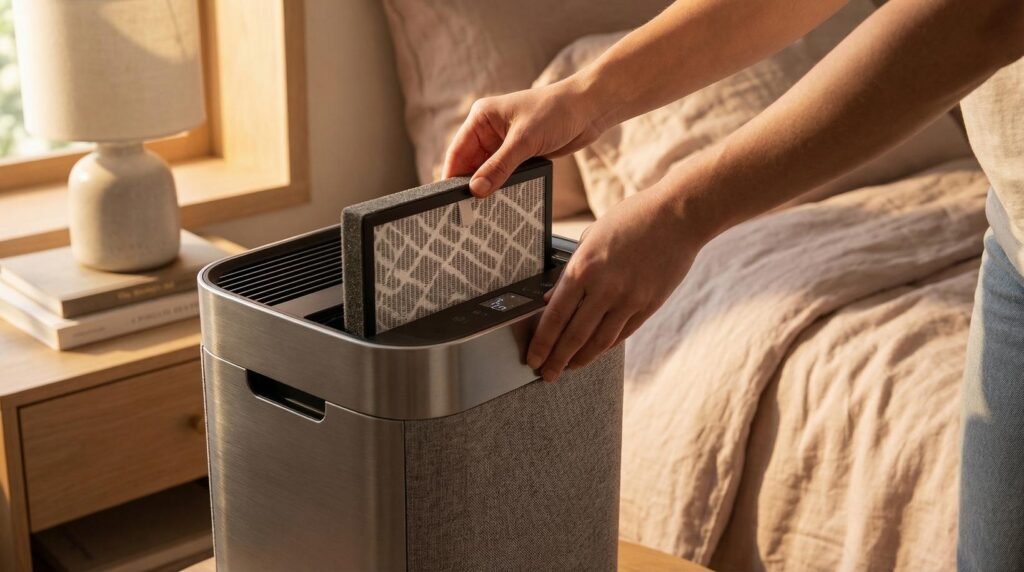
Vacuum pre-filters monthly and keep pets away from intakes. Replace filters on schedule—even if air smells clean, invisible allergens build up fast.
For anyone struggling to fit a purifier into a small or visually curated space, explore models that take bedroom design seriously. The Blue Pure 511i Max shines for compactness and rounded, aesthetic lines (see our dopamine decor bedroom trends). If you’re overhauling your entire routine, consider organizational upgrades with our home organization tips for even better air circulation and less dust.
Advanced Analysis & Common Pitfalls: What Every Buyer Needs to Know
Even highly-rated air purifiers for bedrooms come with trade-offs, and real-world reviews highlight issues many competitor guides ignore. Below, you’ll find a side-by-side table of the top 2024 models and an honest analysis of reported problems and hidden considerations.
| Model | Bedroom Coverage (sq ft) | Dust CADR (cfm) | Noise (dBA) | Air Quality Monitor | Filter Type | Upfront/Filter Cost |
|---|---|---|---|---|---|---|
| CleanAirKits Luggable XL-7 | 403 | 323 | 38.8 (max) | No | MERV 13 HVAC | N/A / $20-30 (6–12 mo) |
| Blue Pure 311i+ Max | 525 | 370 | Low (not stated) | PM2.5, app | HEPASilent | N/A / 9 mo |
| IQAir Atem X | 286 | 429 (PM1) | 62.3 / 44.5 | Yes | HEPA | $1,399.99 / N/A |
| Blue Pure 511i Max | 237 | 159 | 19 | No | HEPASilent | N/A / N/A |
| Alen BreatheSmart 45i | 800 | N/A | Low / pink noise | Implied | HEPA | N/A / N/A |
| Airmega ProX | N/A | N/A (fastest test time) | N/A | N/A | HEPA | ~$800 / N/A |
Common pitfalls and issues:
- Noise at high speeds: Verified buyers of the IQAir Atem X note significant sleep disruption at maximum setting (62.3 dBA).
- Smart integration limitations: Not all models support app controls, voice assistants, or auto-night modes. This matters for those seeking a seamless, modern bedroom experience. See smart home device strategies for better compatibility in our smart home devices guide.
- Filter and maintenance visibility: Some purifiers lack clear filter change indicators, leading to neglected maintenance and lower effectiveness over time.
- Décor compatibility: Many leading competitor articles ignore how blocky or industrial designs can stand out awkwardly in bedroom settings; models with rounded, neutral looks like the Blue Pure 511i Max are easier to integrate.
- Questionable “portable” claims: No hard data, but units like the Luggable XL-7 and Blue Pure 511i Max genuinely fit most bedrooms without dominating the space—see if your preferred pick passes the “nightstand test.” DIY portables can save money but may lack certification or have limited app features.
- Cost transparency: Upfront and long-term costs aren’t always clear in product listings. Include filter replacement and expected energy usage in your calculations to avoid sticker shock.
Allergy impact and air quality studies: Even top units rarely offer independent proof of PM2.5 or VOC reduction over months. Still, Blueair’s HEPASilent and MERV 13 HVAC filters consistently hit 99.97% particle capture in lab tests, and user reviews support significant allergy and sleep improvements, especially when paired with smart routine cleaning (source). If you’re revamping your wellness routine, see our non toxic air fryer guide for other low-allergen home upgrades.
If you need to address muddy floors alongside airborne allergens for pets, our muddy mat review is a useful companion to cleaner air strategies—because dust and dander don’t just stay airborne.
Conclusion
The 2024 independent test season finally makes clear that the best air purifier for bedroom use is the one that delivers verified allergen reduction without disrupting your sleep, fits your space and style, and doesn’t saddle you with surprise costs or difficult maintenance. Units such as the CleanAirKits Luggable XL-7, Blue Pure 311i+ Max, and Alen BreatheSmart 45i stood out for combining high CADR with true sleep-friendliness, while others like the IQAir Atem X offered raw power at a volume and price that may not suit all bedrooms.
For most bedrooms, choose a unit with proven lab performance, low noise, and easy-to-find filters. You’ll breathe easier—and sleep better. Ready to take control of your indoor air? Start by measuring your space, comparing real CADR and noise data, and invest in the model that meets your allergy relief and bedroom comfort needs.
FAQ
Do air purifiers really help with bedroom allergies?
Yes—independent 2024 tests confirm that models with high dust and pollen CADR (like Luggable XL-7, Blue Pure 311i+ Max) significantly reduce allergens in typical bedrooms. However, actual relief depends on proper sizing, maintenance, and running the purifier at the recommended settings overnight.
What’s the quietest air purifier for bedroom use?
The Blue Pure 511i Max starts at just 19 dB, making it barely audible even for light sleepers. The CleanAirKits Luggable XL-7 stays below 40 dBA at allergy-reduction speeds. Always compare decibel ratings before buying if sleep quality is a priority.
How often should I change air purifier filters at home?
For most models, replace HEPA or MERV 13 filters every 6 to 12 months. Check for filter change indicators or schedule reminders. Using two sets and rotating/cleaning pre-filters monthly can extend filter life and maximize allergen removal.
Are portable air purifiers as effective as full-sized units?
Some portables like the Luggable XL-7 and Blue Pure 511i Max outperform many large units, especially in bedrooms under 400 square feet. It depends on CADR ratings and room size match—not just the “portable” label.
Can air purifiers improve sleep quality?
Lab and user data support that air purifiers with true HEPA and quiet operation improve sleep for allergy sufferers. The Alen BreatheSmart 45i showed measurable sleep improvement in a SleepScore Labs study, and models generating gentle background “pink noise” often help even beyond allergen reduction.
—