

Limewash paint interior is making a comeback for a reason: it’s the go-to finish for homeowners craving authentic, non-plastic texture, warmth, and breathability from their walls. Unlike flat, factory paints, limewash ages with character and rewards those who follow the right techniques—while punishing rookie mistakes.
Key Takeaways
- Limewash paint interior gives walls a unique, textured, breathable, and non-toxic finish that’s unlike any modern paint.
- Success hinges on proper prep, specialized application, and realistic workflow planning—most DIY pitfalls are avoidable with the right method.
- There are clear “call a pro” situations: historic substrates, tricky blends, high-traffic areas, and when appearance truly matters.
- Why limewash? The look and purpose
- How to limewash interior walls: Step-by-step guide
- Common pitfalls, troubleshooting, and advanced analysis
- Conclusion—Should you limewash your interior?
- Frequently Asked Questions
Why limewash? The look and purpose
Limewash paint interior finishes create a soft, chalky matte with noticeable texture and depth, setting them apart from regular emulsion paints that can look flat or plastic. This ancient technique, updated for modern homes, delivers subtle movement on walls, absorbs light beautifully, and develops a natural patina as it ages. Homeowners who value depth, warmth, and a design-forward, non-uniform look are increasingly choosing limewash to eliminate dull, factory-applied wall color. According to industry research, “limewash delivers a soft, chalky matte with natural texture and depth compared with flat, uniform colour of regular emulsion.”
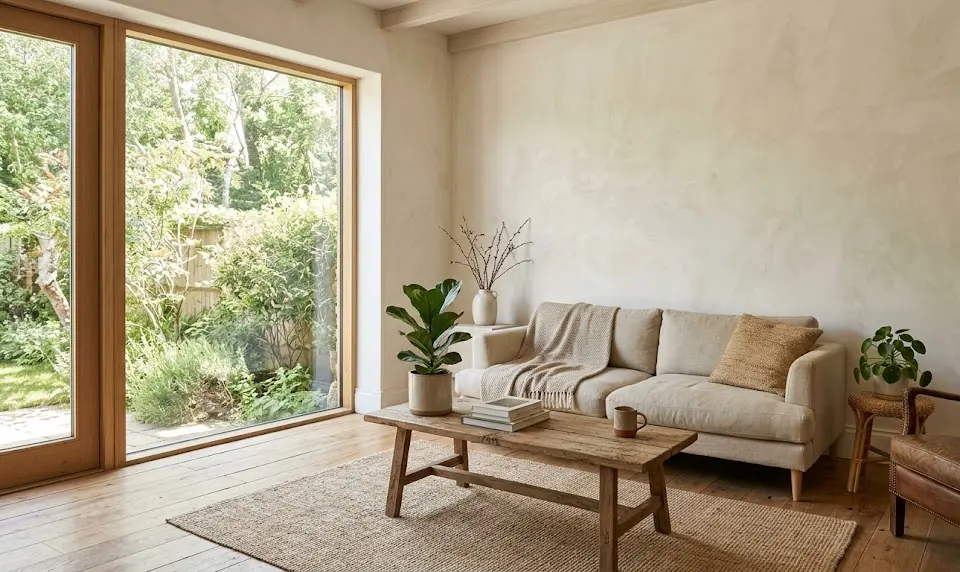
Trends confirm its rise: In 2024, roughly 12% of U.S. homeowners who redecorated interiors opted for limewash paint, up from about 5% in 2019 (source). This reflects the growing demand for natural, sustainable, breathable wall finishes that offer more soul and less sheen.
How to limewash interior walls: Step-by-step guide
Below is a realistic, pro-tested DIY workflow for applying limewash paint interior. Be aware: success depends on taking each stage seriously. Rushing or skipping steps leads to results that are hard or expensive to fix later.
Materials & Tools You’ll Need
- Limewash paint interior (pre-mixed or powder)
- Large natural-bristle brush (preferably rounded or block-style for crosshatch strokes)
- Clean buckets for mixing (with tight lids if pausing work)
- Stainless steel or wood stirrer for constant pigment agitation
- Painters tape, drop sheets, gloves, eye protection
- Primer (breathable mineral or lime primer if needed)
- Mineral sealer for high-traffic areas (optional, but highly recommended)
Step-by-Step Application
- Surface Prep: Remove any old, flaking paint. Thoroughly clean, degrease, and repair the wall. Limewash needs direct contact with mineral surfaces—avoid glossy, synthetic finishes underneath.
- Suction Test: Lightly wet a small area and observe absorption (should darken, not bead up). See “Hacks” above for adjustments.
- Priming: If the surface isn’t mineral (e.g., new drywall, gypsum), use a mineral primer. For old, powdery or dusty walls, consolidate and stabilize. Never use traditional, non-breathable primers.
- Mixing & Pigment Dispersion: Stir the limewash thoroughly and keep stirring every 5-10 minutes. For terracotta shades, ensure complete pigment blending. Test on cardboard or the spare wall area to preview final color (limewash dries much lighter).
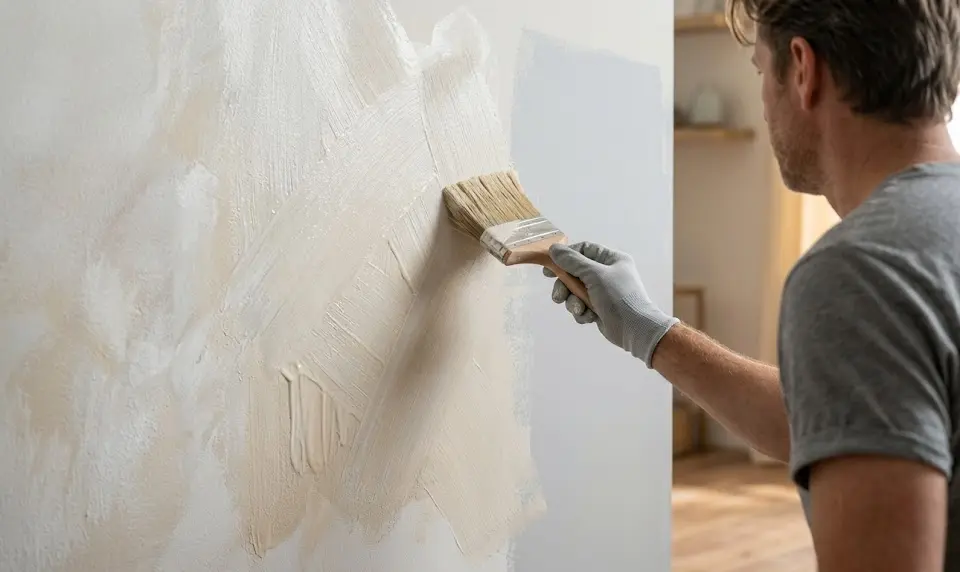
- First Coat: Apply in cross-hatched (X or rainbow) patterns using a slightly damp, wide natural brush. Keep edges wet (“wet-on-wet”)—never allow one patch to dry before connecting strokes.
- Spot Blending: If you need to stop, feather your edge wet, and rejoin when resuming. Never let streaks dry unblended.
- Second/Third Coats: Allow each coat to dry as per manufacturer instructions (often 3–6 hours). Repeat, adjusting dilution so that deeper coverage doesn’t overpower the wall’s natural character.
- Sealing: For busy or splash-prone areas, consider a breathable mineral sealer. This keeps the texture but adds surface strength. Always test sealer on a small section to ensure the finish remains matte.
Timing & Drying
- Most single-room projects (12×12 ft) take 1–2 days, given cleaning, drying, and multiple coats.
- Limewash dries significantly lighter than its wet appearance (source). Resist the urge to overcoat until the true cured color emerges (usually 24–48 hours).
- For help sourcing specialty tools or eco materials, explore home improvement tips or check with dedicated restoration retailers.
Common pitfalls, troubleshooting, and advanced analysis
Even careful first-timers can run into limewash problems. Here’s what typically goes wrong, and what the research and pros recommend to fix or avoid issues:
| DIY Mistake | Root Cause | Pro Solution |
|---|---|---|
| Using rollers or small brushes | Rollers deposit too much/too little and don’t mimic historical texture. Small brushes show lines. | Use broad, natural-bristle limewash brushes for consistent, soft movement. Reference: [1] |
| No suction test, wrong dilution | Walls absorb unevenly, causing blotches or cracks. | Do a suction test; adjust dilution ratio for surface absorption. Every batch may need fine-tuning. See “Hacks” above. |
| Surface not clean or primed | Dust and grease block bond—leads to peeling or powdering. | Deep clean, degloss and use only mineral-compatible primers for tricky substrates. |
| Not stirring regularly | Pigment settles out—causes streaks, uneven or patchy color. | Stir every 5–10 min while working. Use a dedicated stirrer, especially for intense pigments like terracotta. |
| No wet-on-wet sequencing | Laps and edges dry before connecting—harsh lines result. | Work in small areas; always keep a “live edge.” Feather brushstrokes together quickly. |
| Humidity/temp ignored | Too dry: flashing and cracks. Too humid: streaks, slow dry, or powdery finish. | Limewash thrives in moderate humidity (not A/C-blasted rooms). Plan for airflow, but no strong draft or heaters. |
| Poor color judgment | Limewash cures 2–3 shades lighter than wet. | Always sample, watch full cure, and adjust pigment strength if needed for subsequent coats. [5] |
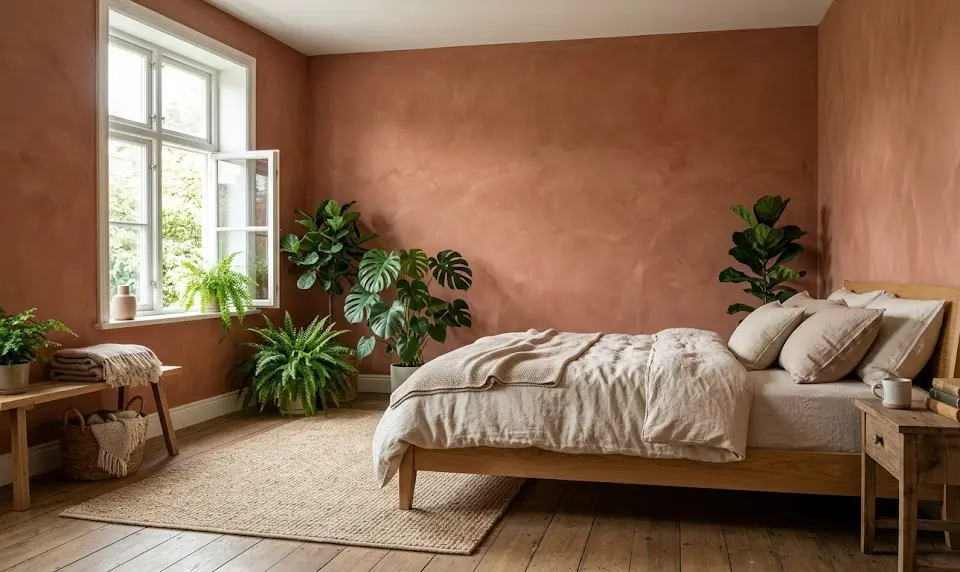
With terracotta and other rich earth hues, iron-oxide pigments behave uniquely—tending to show more variation as they cure and patinate. For high-traffic or stain-prone rooms (like hallways or kitchens), professionals advise sealing with a breathable mineral finish that won’t kill the cloudy, organic effect (source). If deeper troubleshooting is needed, get more guidance from home interior remodeling experts or restore only with tested, compatible mineral sealers.
Conclusion—Should you limewash your interior?
Limewash paint interior offers unbeatable tactile character, breathability, and authenticity—not to mention a major sustainability edge over latex and acrylic paints. But it is not a “slap it on and go” project. You need the right prep, method, and expectations. For most standard rooms, results can be stunning if you take the process seriously, do the suction and patch testing, and accept the time and material costs. When working on historic substrates, aiming for showstopping color blending, or needing bulletproof durability in high-traffic spots, consult a skilled professional. Want to transform your walls? Start small: try a test wall, source a quality limewash kit, and see why this natural finish is worth the learning curve. Ready for the next level? Dive into more home improvement tips and get your hands on sustainable materials for your next project.
Frequently Asked Questions
Is limewash paint interior safe and eco-friendly?
Yes. True limewash is made from lime, water, and natural pigments. It is a zero VOC wall finish, non-toxic, and biodegradable compared to acrylic or latex paint.
How long does limewash last on interior walls?
Applied over the right mineral substrate and properly protected, limewash can last for decades. It develops character as it ages and doesn’t peel or flake like film-forming paints.
Can I apply limewash over painted drywall?
You can, but results depend on preparation. You’ll need a breathable mineral primer that allows suction. Never apply over sealed, glossy, or plasticized layers.
Why does my limewash wall look streaky?
Common causes include poor stirring (pigment settles out), working too slow (edges dry out), or wrong brush technique. Always keep a wet edge and stir limewash constantly for even color.
Do I need to seal limewash paint?
You don’t have to in most low-traffic, dry areas. For busy rooms (kitchens, hallways), use a mineral or silicate sealer designed for breathable wall finishes.