

Maximalist garden design is rapidly evolving as new evidence shows dense, layered beds supercharge soil health, foster biodiversity, and extend floral impact better than conventional approaches—but only if gardeners avoid key planning mistakes and invest in resilient design techniques tailored for perennial, floramagoria-style beds.
Key Takeaways
- Dense, layered plantings boost soil microbes, retain water, and accelerate the buildup of stable organic carbon (2024 research).
- The right plant and path layout sidesteps compaction, improves biodiversity, and minimizes chemical inputs while supporting pollinators.
- Maximalist gardens need up-front planning and hands-on management in early years to avoid issues like access, weed flush, and pest spikes—but become lower maintenance and more resilient over time.
- Why dense planting techniques matter for soil health and biodiversity
- Step-by-step maximalist garden design and maintenance
- Advanced analysis & common pitfalls in maximalist gardens
- Conclusion
- FAQ
Why dense planting techniques matter for soil health and biodiversity
Maximalist garden beds rely on dense planting techniques that create a continuous, multi-layered root canopy. This approach is more than an aesthetic trend: in 2024, peer-reviewed research confirmed that dense, layered plantings “foster a richer microbial and fungal community, and … increase water‑holding capacity and accelerates the buildup of stable organic carbon”. Mechanistically, these benefits arise from the complex web of roots, litter, mulch, and persistent residue, which continually feed soil microbes and fungi. More roots translate into more pathways for carbon, water, and nutrients, while leaf litter and frequent mulching maintain cool, moist soil conditions. The result is improved nutrient cycling, increased infiltration, and organic matter gains that far exceed those of traditional, sparse plantings.
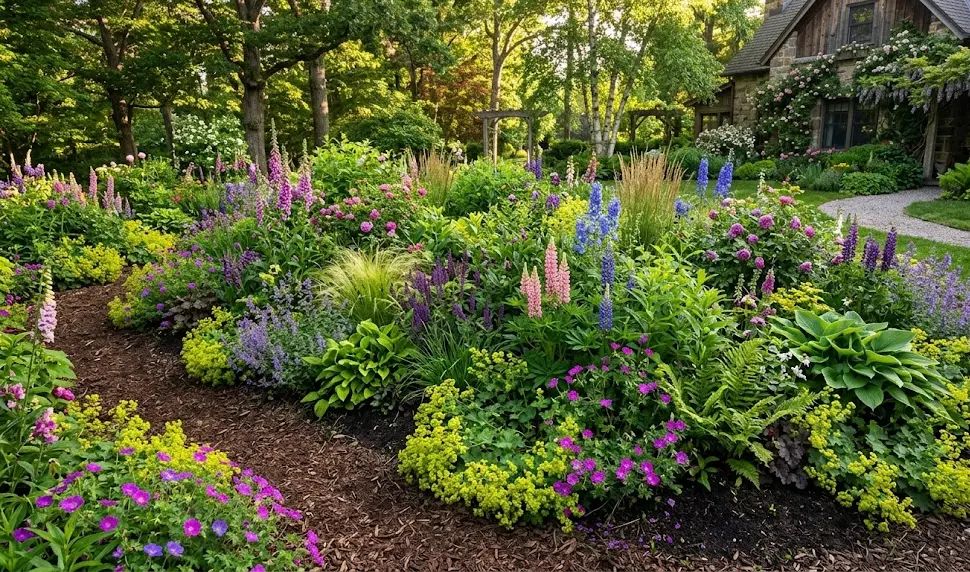
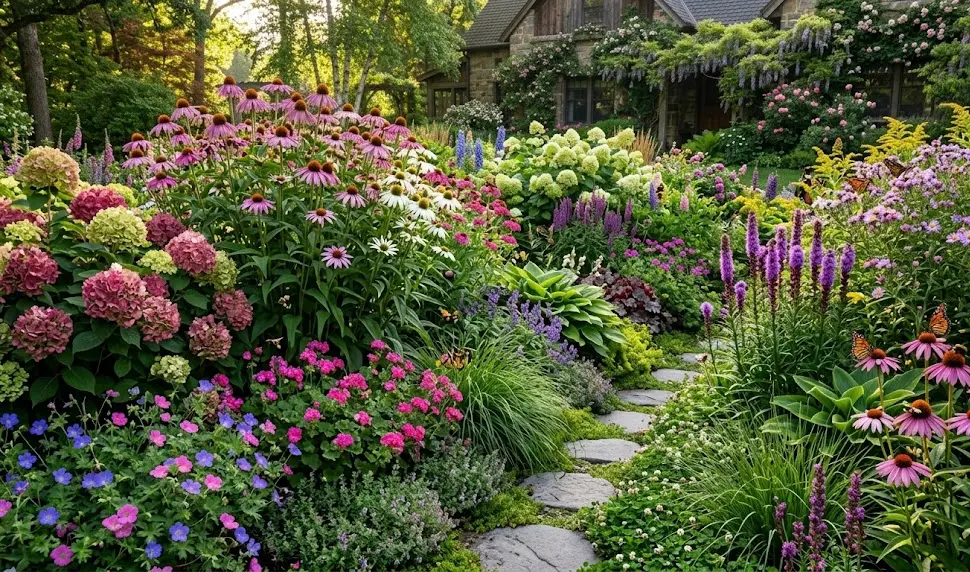
Dense plant communities also provide vital, diverse microhabitats for pollinators and beneficial insects while physically suppressing weeds and shading the soil. Studies show that “mixing annuals, perennials, native grasses, and nitrogen‑fixing species in dense mosaics improves soil structure … and provides abundant floral resources for pollinators.” By layering a floramagoria (a tapestry of colors and plant types), maximalist gardens achieve both year-round visual drama and ecological support.
Still, the potential of this approach hinges on smart layout, species choice, and proactive management to avoid classic pitfalls. The next section provides a hands-on, step-by-step framework using the latest science-backed solutions.
Step-by-step maximalist garden design and maintenance
Building a maximalist garden that is lush yet resilient involves much more than simply cramming in plants. Follow this structured framework for success:
- Start with accessible bed geometry. Keep blocks less than 1.2 m wide so you can reach from both sides. If designing wider, incorporate stepping pads, mulched internal paths, or stone treads to allow access for maintenance without compacting soil (see tips).
- Prepare soil intensively in year 0. Invest in compost incorporation, organic mulch, and slow-release amendments. Leave cover-crop residues on top for extra organic matter, “accelerating the buildup of stable organic carbon” (Research Findings 2024). Consider raised or edged beds for improved drainage and visual clarity. For specific raised bed installation tips, see these recommendations.
- Design for year-round structure using layers. Combine tall, long-flowering shrubs (such as Hydrangea paniculata ‘Limelight Prime’ or Buddleja ‘Grand Cascade’), mid-tier perennials (like Echinacea ‘Lakota’ or Salvia nemorosa ‘Blue by You’), perennial grasses (for example, Panicum virgatum ‘Niagara Falls’ or Molinia caerulea ‘Karl Foerster’), and low-spreading, nitrogen-fixing species (clover, vetch, lupines) as ground cover (research source). Layering canopy and root depths “integrates nitrogen-fixers … to sustain fertility” while reducing the need for fertilizer.
- Stagger and cohort planting. Arrange plants in staggered groups and aim for no more than 30 cm diameter ‘bare’ gaps between root systems at maturity. Group compatible plants (water/sun preferences, root habits, bloom times) for easier management and continuous seasonal interest. Work in blocks of 3 to 6 perennials per species for impact but keep cohort edges loose for a natural look.
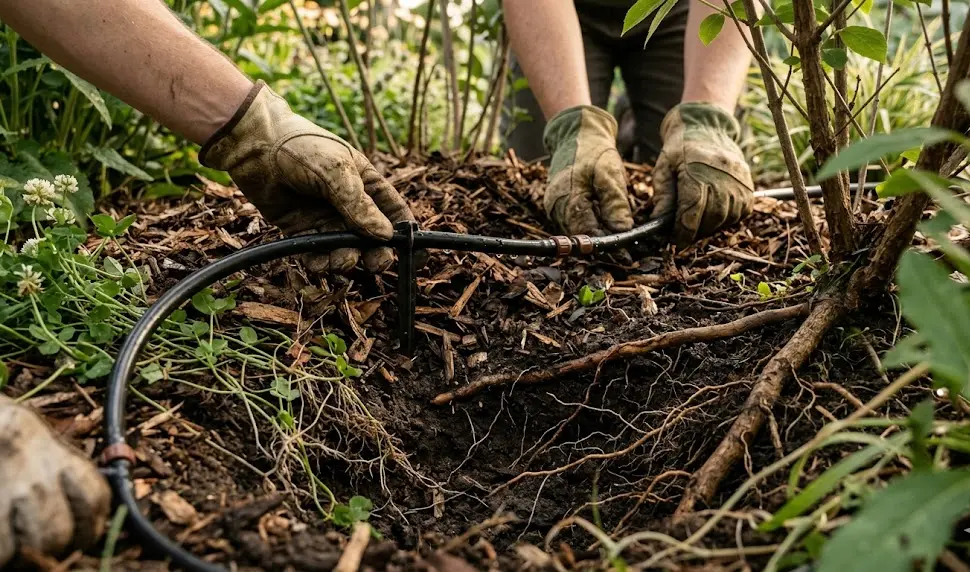
- Install irrigation from the start. Use drip lines or soaker hoses beneath mulch to “ensure uniform moisture,” zoning separately for beds with different sun or slope conditions (Research Findings). Surface mulches and annual compost top-dressing reduce water loss and keep microbes active.
- Mulch and top-dress annually. Organic mulch (leaf mold, shredded bark, straw) conserves moisture, feeds below-ground life, and suppresses weed seeds. In spring and late summer, top-dress with 2 to 5 cm of compost, plus any needed slow-release amendments, to nurture soil biota and replenish nutrients.
- Monitor plant performance and thin as needed. In years 2–3, evaluate crowding, prune back aggressive perennials, and selectively thin or move plants for optimal air circulation and reduced pest risk.
Sample plant list for reliable, low-input floramagoria beds (2024 cultivars):
- Tall shrubs: Hydrangea paniculata ‘Limelight Prime’, Buddleja ‘Grand Cascade’, Rosa ‘Petite Knock Out’
- Mid perennial block: Echinacea ‘Lakota’, Salvia nemorosa ‘Blue by You’, Rudbeckia ‘American Gold Rush’
- Grasses: Panicum virgatum ‘Niagara Falls’, Molinia caerulea ‘Karl Foerster’, Sporobolus heterolepis
- Nitrogen-fixers: White Dutch clover, Lupinus perennis
Need more design help? See our guide to replacing turf with low-input clover for nitrogen-fixing groundcover ideas, or explore layering concepts for small spaces if you’re working in tight areas. For raised bed structure or mulch selection, check budget-friendly home improvement tips.
Advanced analysis & common pitfalls in maximalist gardens
While the rewards of maximalist gardens are significant, gardeners consistently report a handful of practical problems in both survey research and anecdotal accounts. Addressing these head-on improves outcomes and saves time and money in the long run.
| Common Challenge | Explanation | Fix / Prescriptive Solution |
|---|---|---|
| Bed too wide to reach center | Soil gets compacted and plants suffer if you must step inside | Limit beds to 1.2 m wide; add stepping pads/paths |
| Uneven moisture (drought or rot pockets) | Dense or sloped beds cause water pooling or dry pockets | Zone irrigation; bury soaker hoses under mulch; site beds on level ground |
| Weed flush in year 0–1 | Exposed or disturbed soil at planting stage leads to rapid weed emergence | Heavy mulch after planting; pre-emergent organic mulch; quick annual cover crops |
| Pest and disease spikes | Lush growth invites more insects; poor circulation can foster rot/fungi | Purposeful thinning/pruning; select disease-resistant cultivars; encourage beneficial insects with habitat planting |
| Steep learning curve on plant compatibility | Plant competition or mismatched water/sun needs can cause loss and gaps | Track plant combos and labor in first 3 years; replace underperformers promptly |
| Soil compaction from stepping | One footstep after rain can compact a zone for years | Always maintain visible, accessible routes—even in mature plantings |
Deeper dive: Quantifiable benefits & monitoring
- Soil organic matter: Track with annual soil tests – expect a 5–15% rise over 3 years with proper dense planting, mulch, and organic inputs.
- Water holding capacity: Simple infiltration tests (timing how long soil absorbs 500 ml of water in a ring) can show before/after improvement.
- Pollinator visitation: Set up fixed photo points or timed floral surveys once a month in peak season to measure progress.
- Microclimate stability: Use max/min thermometers and inexpensive soil moisture sensors to log cooler, more stable temps in layered beds.
Want to dive deeper? Check our resources on modular storage for garden tools and smart home irrigation management for dense beds.
Conclusion
Science-driven maximalist garden design delivers resilient, vibrant landscapes along with exceptional ecosystem services—but only if dense planting techniques are grounded in good access, irrigation zoning, annual mulching, and a layered, learning-friendly approach to both biodiversity and maintenance. Experienced home gardeners and landscape designers who embrace these principles can look forward to fewer chemicals, richer soils, and a garden with authentic, year-round “floramagoria” impact. Start outlining your accessible beds today, and schedule time to monitor and adapt for best results.
Ready to upgrade your planting? Download our 3-year sample maintenance and budgeting template, or browse more home improvement ideas that support garden resilience.
FAQ
What is a maximalist garden?
A maximalist garden is a densely planted, visually abundant outdoor space that prioritizes biodiversity and layered plantings over minimalism. It uses overlapping heights, textural variation, and species diversity to support soil health and pollinators while maximizing beauty.
How do I keep maintenance manageable in a dense, maximalist bed?
Keep beds no wider than 1.2 m for easy reach, install access pads, invest in drip irrigation, mulch heavily, and plan annual thinning/pruning. Tracking labor hours for the first 3 years helps forecast time and budget needs.
What are the biggest mistakes to avoid?
Common missteps include making beds too wide, skipping initial soil investment, not planning access routes, planting incompatible species together, and ignoring irrigation zoning. Don’t step into beds after rain—protect the soil structure by planning all access in advance.
What shrubs and perennials work best for continuous bloom?
Recent top performers include Hydrangea paniculata ‘Limelight Prime’, Buddleja ‘Grand Cascade’, Echinacea ‘Lakota’, Salvia nemorosa ‘Blue by You’, and grasses like Panicum virgatum ‘Niagara Falls’. Select for repeat-flowering, disease-resistant cultivars adapted to your region.
How can I measure the ecological benefits of my maximalist garden?
Track organic matter with soil tests, monitor pollinators by counting visits, measure water infiltration before and after installing the bed, and log microclimate stability with affordable max/min thermometers or soil moisture sensors.