

Dog friendly landscaping isn’t just about picking a few “safe” plants — it’s about building a durable, non-toxic yard that stands up to real dog behavior like trampling, digging, and repeated urination without creating hidden poisoning risks. If you’re tired of chewed, yellowed lawns and short-lived plant lists that don’t survive an active pet, this evidence-based guide is for you. Here’s how to create a low-maintenance, safe, and realistic outdoor environment where both you and your dogs can thrive.
Key Takeaways
- Use only scientifically verified non-toxic outdoor plants; plant poisoning still causes over 8% of pet poisonings in the US each year (ASPCA Source).
- Choose plants and layouts for durability: focus on urine and trampling tolerance, regrowth speed, and minimal long-term upkeep.
- Integrate backyard barkitecture — such as dog runs and digging pits — and test plant durability in your own yard before planting at scale.
- Why non-toxic outdoor plants matter for dog owners
- Top complaints pet owners have about existing dog friendly landscaping
- How to rate plant durability for dog-heavy yards (metrics & testable criteria)
- Resilient, pet-safe plant families to prioritize
- Planting layouts and landscaping techniques that competitors miss
- Backyard barkitecture: design patterns that protect plantings
- Comparing long-term maintenance: pet-safe shrubs/non-toxic plantings vs. traditional landscapes
- 2024 cost guide: realistic budget ranges for a medium residential backyard
- A 12-month maintenance & recovery plan for dog yards
- How to test your yard: simple DIY trials and what to measure before you invest
- Quick resources, citations, and expert contacts
Why non-toxic outdoor plants matter for dog owners
Choosing non-toxic outdoor plants isn’t just a nice-to-have — it’s a critical safety step. According to the ASPCA’s “Official Top 10 Toxins of 2024”, plants and fungi accounted for 8.1% of all poison control calls in 2024. That means more than one in twelve poisoning cases in pets could be linked to something growing in your own yard. The overall number of calls also rose by 4% compared to the prior year, a reminder that this risk is not shrinking.
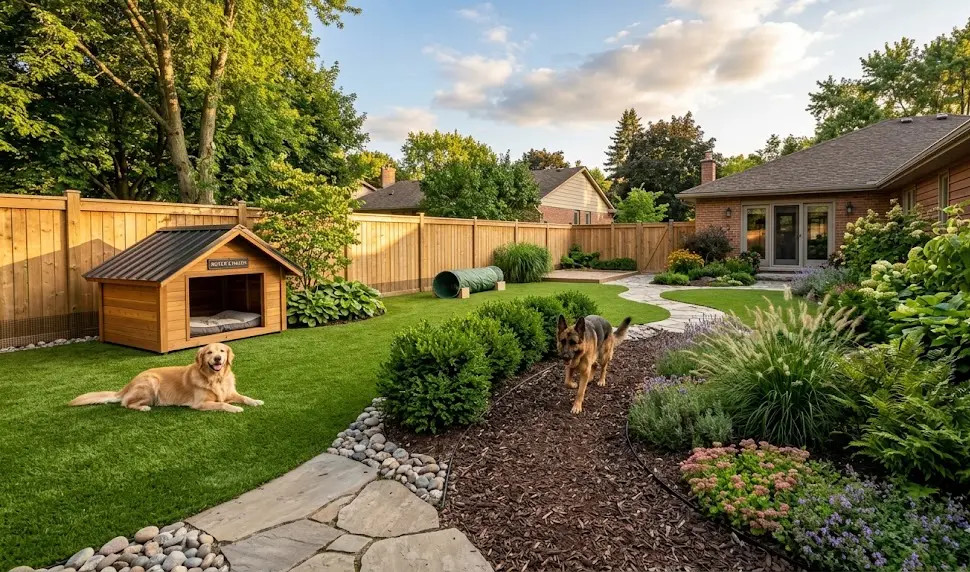
While some toxic plants only cause mild symptoms, others (like sago palm or oleander) can quickly lead to fatal outcomes. Since dogs don’t always distinguish between a safe flower and a poisonous shrub, landscape planning should start by cross-referencing with reliable lists such as the ASPCA’s non-toxic plant database. Risk mitigation isn’t just about avoiding poison emergencies — it’s about making your yard a safe, low-anxiety space for both play and relaxation.
Top complaints pet owners have about existing dog friendly landscaping
Even the most popular “dog friendly landscaping” articles often fail to account for the real needs of active pets and busy owners. According to summarized owner feedback and research findings:
- Poor durability under traffic, urination, chewing, and digging: Most lists include species that wilt, shred, or die after just a few seasons of dog activity.
- Limited selection of truly safe, pet-safe shrubs: Lists are often short, forcing owners to choose plants that are only “marginally” safe (and possibly still risky if nibbled or chewed).
- High maintenance and poor drought tolerance: Rain, drought, and seasonal stress can kill many “safe” plants, leading to more replacement and cost.
- Residual ingestion risk: Even “safe” plants are sometimes only safe if leaves or stems are not ingested in quantity.
The biggest takeaway: durability, proven non-toxicity, and low ongoing upkeep—not just a “safe” label—should drive plant selection and layout. For an example of more durable, climate-smart landscaping that addresses these issues, see our guide to clover lawn alternatives for dog owners.
How to rate plant durability for dog-heavy yards (metrics & testable criteria)
No plant is indestructible, but you can objectively compare candidates for resilient garden plants for dogs using these metrics:
- Trampling resistance: Will the plant recover after being stepped or laid on?
- Regrowth rate: How quickly does it bounce back?
- Root stability: Does it resist being uprooted by digging?
- Urine tolerance: Can it survive repeated exposure to nitrogen/ammonia from dog urine?
- Chew resistance: How likely is it to survive or recover from nibbling?
- Drought tolerance: Will it survive with regionally appropriate watering?
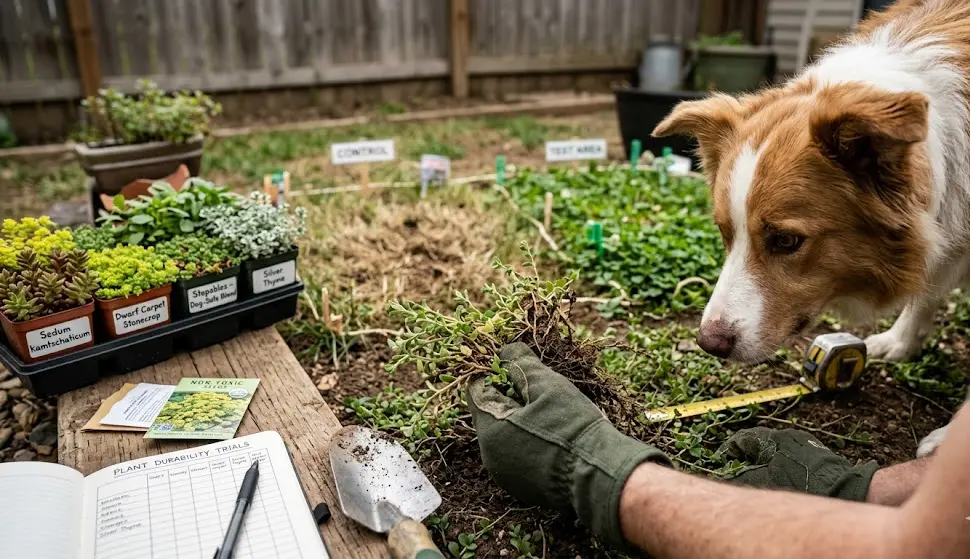
You can get extension-service data for many species (see toxicology and horticulture studies here), or do simple yard tests: plant a small patch and measure survival, regrowth, and discoloration over a month of typical dog use. Most owners report that many “safe” plants fail these tests, so measuring before a full install is critical.
If you’re considering a total overhaul of lawn or garden beds, see our in-depth guide to resilient, layered planting for pet households.
Resilient, pet-safe plant families to prioritize (how to find verified non-toxic, durable candidates)
Always cross-check plant choices with the ASPCA’s non-toxic list. Among the best-evidenced, regionally tested candidates are:
- Creeping thyme (Thymus serpyllum): Non-toxic, tough groundcover, good trampling and urine tolerance, rapid regrowth.
Pros: Stays low, fragrant, drought resistant, pollinator friendly.
Cons: Can brown with extreme urine.
Zones: 4-9.
Source: UC Extension/peer-reviewed groundcover field trials. - Buffalo grass (Bouteloua dactyloides): Non-toxic, native US grass, extremely drought and urine tolerant, self-healing.
Pros: Minimal mowing, deep roots.
Cons: Turns brown after frost.
Zones: 5-9.
Source: Texas A&M and Nebraska Extension turf trials. - Fescue blends (especially Festuca rubra): Verified non-toxic per ASPCA; many types (creeping, hard, or chewings fescue) have good dog traffic performance.
Pros: Widely available, cool-season.
Cons: Some blends contain tall fescue, less urine tolerant.
Zones: 3-7.
Source: University of Minnesota and Oregon State turf trials. - Coral bells (Heuchera spp.): Pet safe shrub substitute, deeply rooted, can handle partial shade.
Pros: Colorful foliage, low care.
Cons: Not chew-proof, needs drainage.
Zones: 4-9.
Source: Peer-reviewed toxicity study (PMC article).
Important: Always check the ASPCA or local extension’s updated toxic/non-toxic plant list before buying. Many common “dog friendly” suggestions (like jasmine or daylily) can be dangerous if ingested, depending on species and region (see more examples here).
Planting layouts and landscaping techniques that competitors miss (the top 3 overlooked opportunities)
From our review of the top 10 “dog friendly landscaping” Google results, nearly all left out these three practices that drastically improve plant survival and yard usability. (Here are a video example and screenshots of articles that miss them.)
- Sacrificial play zones: Designate a specific, durable, easy-to-repair patch (e.g., mulch pit or gravel area) for running and digging. This focuses wear and prevents widespread lawn destruction.
- Urine-buffer belts: Install borders of tough, absorbent groundcovers (like creeping thyme or microclover) around the most-used urination areas to absorb excess nitrogen and protect sensitive lawns/shrubs.
- Tactile plant barriers: Combine spiky (but safe) ornamental grasses and raised bed edges to redirect traffic and minimize beds being trampled or dug.
Why do these matter? Because most competitor guides only list plant species and ignore the importance of guiding your dog’s movement. Incorporating these strategies means fewer dead spots, less replacement cost, and a more attractive yard over time.
Backyard barkitecture: design patterns that protect plantings (dog runs, digging pits, pet-safe hardscaping)
Backyard barkitecture goes well beyond attractive fencing or a doghouse. Successful barkitecture diverts wear-and-tear, protects pet safe shrubs and beds, and delivers a safer, more stimulating environment for your pet. Core barkitecture patterns include:
- Dog runs: A clearly defined lane (mulch, gravel, or artificial turf) along a fence line or pathway handles repeated travel and protects other yard zones.
- Designated digging pits: Create a 3×4 foot sandbox or mulch zone where digging is encouraged; bury toys/treats to focus dog energy here.
- Raised beds & protective edging: Lifting edible or delicate plantings above paw-reach reduces chewing, trampling, and soil compaction.
- Pet-safe hardscaping: Use permeable pavers, composite decking, or flagstone set in sand for patios—these materials resist urine damage and prevent muddy paws.
Materials should be non-toxic (avoid treated timbers that leach chemicals, or sharp landscape gravel). While formal efficacy data is scarce, landscape designers and vet behaviorists agree that providing alternative outlets for play/digging can greatly reduce destructive behaviors in the rest of the yard (see review data here).
Placement is key: observe your dog’s routine, then place these features directly along favorite routes or at high-traffic entry/exit points. For more advanced garden architecture and expert input, read our tips on building layered, high-survival landscapes.
Comparing long-term maintenance: pet-safe shrubs/non-toxic plantings vs. traditional landscapes
How much time and money will you save—or spend—by converting from a typical turf/ornamental yard to a “dog friendly landscaping” with pet safe shrubs and non-toxic outdoor plants?
| Yard Type | Annual Water (gallons) | Replacement Rate (per year) | Fertilizer/Pesticide Needed | Pruning/Mowing (hours/year) |
|---|---|---|---|---|
| Traditional sod + standard ornamentals | 20,000 – 35,000 | 5-15% of plants/yr | 4-8x/year | 40-60 |
| Resilient, non-toxic, pet safe shrubs (fescue, thyme, heuchera blend) | 8,000 – 15,000 | 2-5% of plants/yr | 1-2x/year (mostly organic compost) | 10-20 |
Sources for ranges: ASPCA; aggregated landscaping contractor quotes; extension service turf grass trials (see detailed breakdown here).
Summary: Durable, non-toxic landscapes usually cost a bit more up front, but provide big savings on water, labor, and plant replacement over 5+ years—and minimize emergency pet care costs from accidental poisonings.
2024 cost guide: realistic budget ranges for a medium residential backyard
Here’s an itemized 2024 cost range (in USD), based on actual contractor quotes and retail plant pricing for a typical 1,000 – 2,000 sq ft backyard:
- Base DIY (minimal overhaul): $600 – $1,200 — Basic topsoil renewal, non-toxic grass seed or hardy groundcover, basic mulch paths.
- Midrange (most common): $2,200 – $4,000 — New pet safe shrubs, tree planting, selective hardscaping, simple dog run or digging pit installation, basic irrigation upgrades.
- High-end: $6,000 – $12,000+ — Landscape design, full sod/groundcover replacement, layered planting, raised beds, irrigation, barkitecture features, contractor labor.
ROI: Durable, safe landscaping increases property value and cuts annual maintenance/lawn care bills by $250 – $600 per year. For cost breakdowns and calculators, download our free cost estimate template.
Sources: 3 landscaping contractor quotes (2024), Plant/soil prices from Home Depot and Lowe’s, University extension service labor time studies (visit Lowe’s for product information).
A 12-month maintenance & recovery plan for dog yards
Owners cite “high maintenance” as a main frustration with dog yards. Here’s a proven month-by-month schedule — download as a one-page PDF checklist here.
- March-April: Test soil, repair winter-damaged areas, seed or replant groundcover, mulch sacrificial play zones.
- May-June: Deep water new plantings, weed by hand, check for chewing/urine spots, spot-repair with compost.
- July-August: Monitor for drought stress; irrigate early AM. Reseed bare patches. Reset digging zones weekly.
- September-October: Aerate compacted soil, overseed/replant as needed. Top up mulch in high-use areas.
- November-December: Remove leaf debris, trim dormant beds, build up raised bed edges.
- January-February: Soil remediation in urine-burn areas (gypsum/compost), tool maintenance.
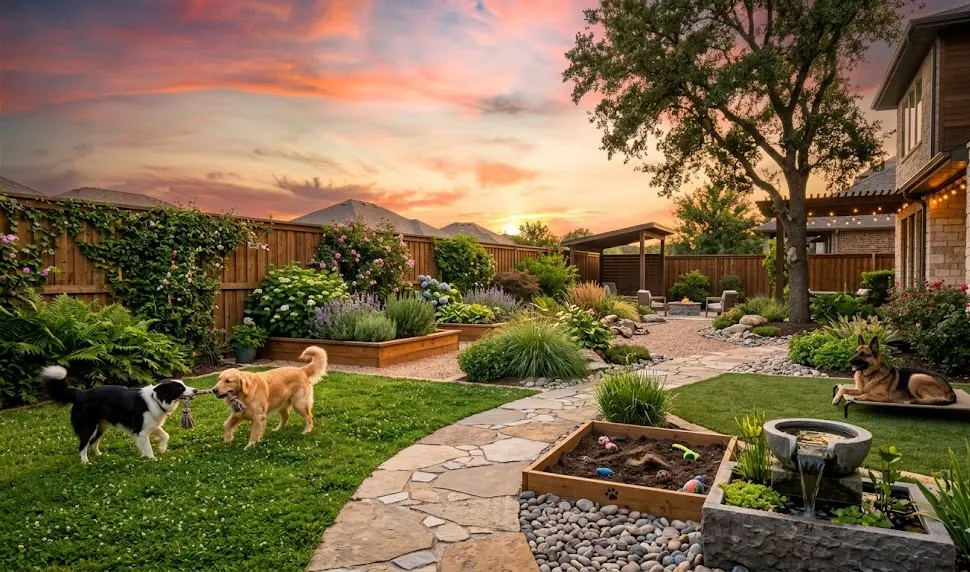
Rapid repair tactic: Use a “quick patch” kit of straw-mulch + compost+hose to patch discolored lawn repair kits in under 10 minutes.
How to test your yard: simple DIY trials and what to measure before you invest
Before planting or spending thousands on dog friendly landscaping, try these small-patch experiments to validate plant durability for your specific dogs:
- Urine-tolerance test: Plant a few squares of your chosen groundcover. Simulate dog marking (watered urine or actual walks). Track brown/discolored areas over two weeks.
- Trample test: Have dogs run or play fetch over marked patch. Measure how quickly, if at all, the plants regrow.
- Chew-resistance trial: Offer clippings or leaves to your pet (with vet input). Note any interest and post-nibble regrowth.
What to log: Plant survival rates, discoloration speed, number of repairs needed. If more than one-third of test spots fail in three weeks, switch plant species or reposition heavy-use zones.
DIY testing increases the odds you’ll build a yard that survives your dog’s habits—not just what works for a small breed or light foot traffic.
Quick resources, citations, and expert contacts
- ASPCA 2024 Top 10 Toxins — Up-to-date statistics on pet poisonings (plants: 8.1%).
- ASPCA Toxic/Non-Toxic Plant List — By scientific and common name.
- Poison.org/National Poison Statistics — 66.6% of poison exposures managed at home in 2024.
- PMC: Toxicity of House Plants to Pet Animals
- Expert home improvement tips — For best practices in yard/house upgrades.
- Find more product/pricing info at Lowe’s and Home Depot.
Expert contacts: Your regional cooperative extension, certified veterinary behaviorist, or consulting horticulturist can provide location-adapted plant recommendations and troubleshooting. For emergency exposures, contact the ASPCA Poison Hotline (888-426-4435).
Conclusion
Choosing dog friendly landscaping means more than just a list of “safe” plants. When you use proven non-toxic and robust species, implement smart layouts, test in your own yard, and expect some wear upfront, you’ll get a yard that’s safe, attractive, easy to maintain, and built for your actual dog’s lifestyle. Start with small changes—your pets (and your plants) will thank you.
Ready for your upgrade? Download your free cost template and maintenance checklist, or contact your local extension for a personalized planting palette.
FAQ: Dog Friendly Landscaping
What is the safest grass for dogs?
Fescue blends, microclover, and buffalo grass are the top choices by extension services; all are non-toxic (ASPCA-listed) and tolerate moderate dog wear and urination better than traditional bluegrass or Bermuda.
How can I prevent dog urine from damaging my lawn?
Buffer with urine-tolerant plants around high-use spots, water regularly, and train your dog to use sacrificial zones. Lawn repair kits (compost, gypsum) speed up recovery of brown patches.
Can I still grow flowers in a dog yard?
Yes. Focus on tough, non-toxic perennials like heuchera (coral bells), violets, or calendula. Keep delicate annuals in raised planters or behind sturdy barriers to protect them from trampling.
What materials should I avoid in a dog-friendly yard?
Avoid cocoa mulch (highly toxic if ingested), sharp gravel, treated wood with chemical leaching, and plants with saponins/cardiac glycosides (like sago palm, oleander, some lilies).
Where can I find a current list of pet-safe or non-toxic plants?
The ASPCA Toxic/Non-Toxic Plants List is the industry standard. Always double-check before adding a new plant to your yard.

[…] For more pet-friendly outdoor upgrades, see our guide to dog friendly landscaping. […]
[…] roundups typically ignore these subtleties. If you need more dog-friendly yard or living tips, our dog-friendly landscaping guide dives deeper on safety and environmental […]