
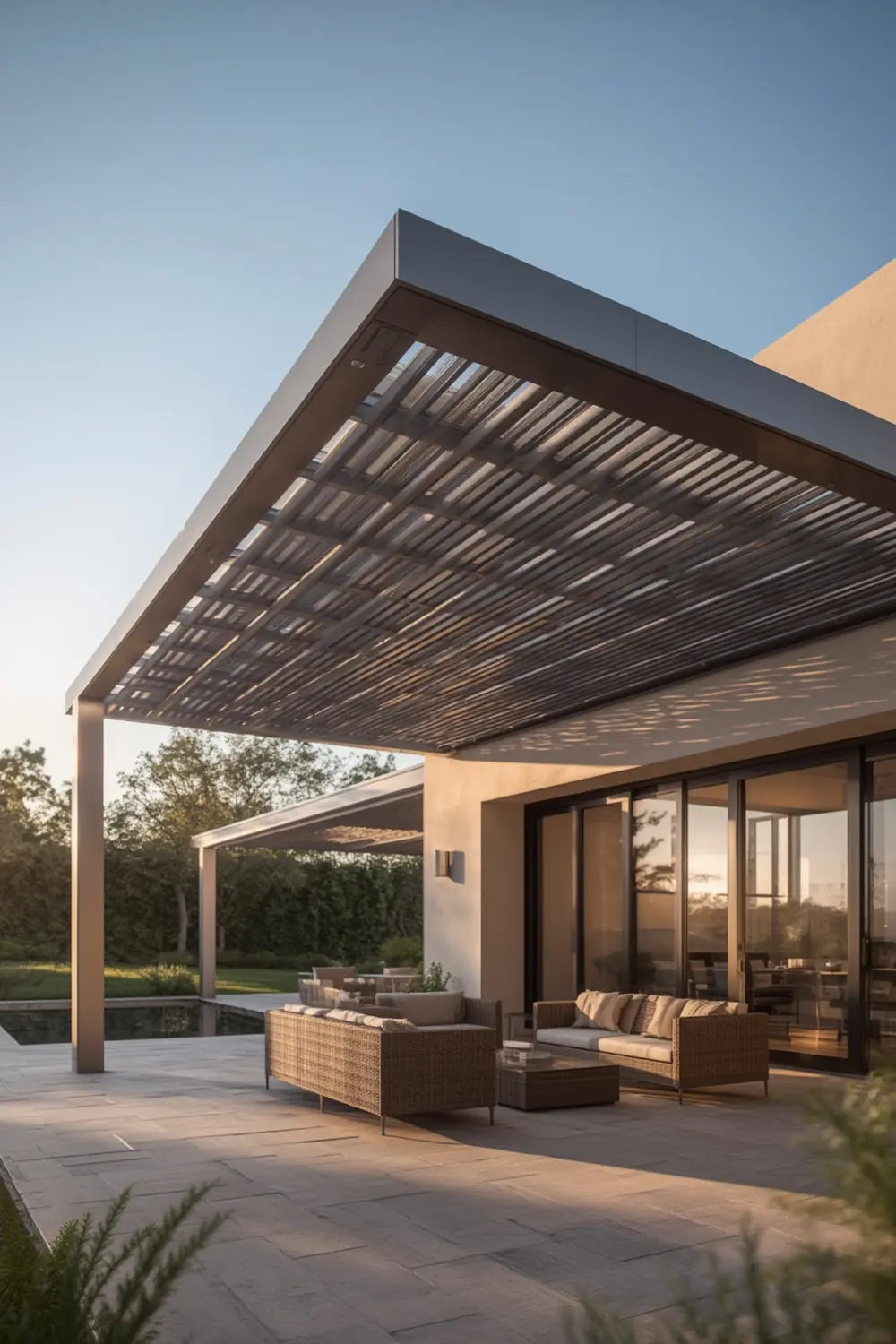
Bioclimatic solar pergola systems have transformed outdoor living for homeowners searching for a smarter, more durable upgrade than the typical louvered roof pergola kit. If you want to maximize comfort, minimize maintenance headaches, and see a genuine return on investment not just flashy marketing—this data-backed guide is for you.
Key Takeaways
- Bioclimatic Solar Pergolas combine energy generating solar panels, motorised louvers, and real waterproofing for true year-round use and reliable ROI.
- Proper vendor vetting is essential: buyers should scrutinize motor and sensor warranties, IP ratings, drainage, installation quality, and ask for real performance data.
- Expect higher upfront costs than basic kits but also far greater longevity, property value upside, and — done right — long-term maintenance savings.
- Market Snapshot—Adoption, Scale, and Growth
- What a Bioclimatic Solar Pergola Actually Is
- Core Benefits, Real Pain Points, and Common Pitfalls
- Conclusion
- FAQ
Market Snapshot: Adoption, Scale, and Growth
In 2024, the global bioclimatic solar pergola market hit roughly US$480 million and is expanding at about 7 percent per year. Forecasts project it will top US$1 billion by 2034. The residential segment now represents about 45 percent of sales, with North America and Western Europe as lead adopters. In practical terms, these systems now appear in approximately 12 percent of new outdoor-living remodels, especially where smart home adoption is high. U.S. smart device penetration has reached 69 percent of households.
[Source] | [Source] | [Source]
What a Bioclimatic Solar Pergola Actually Is
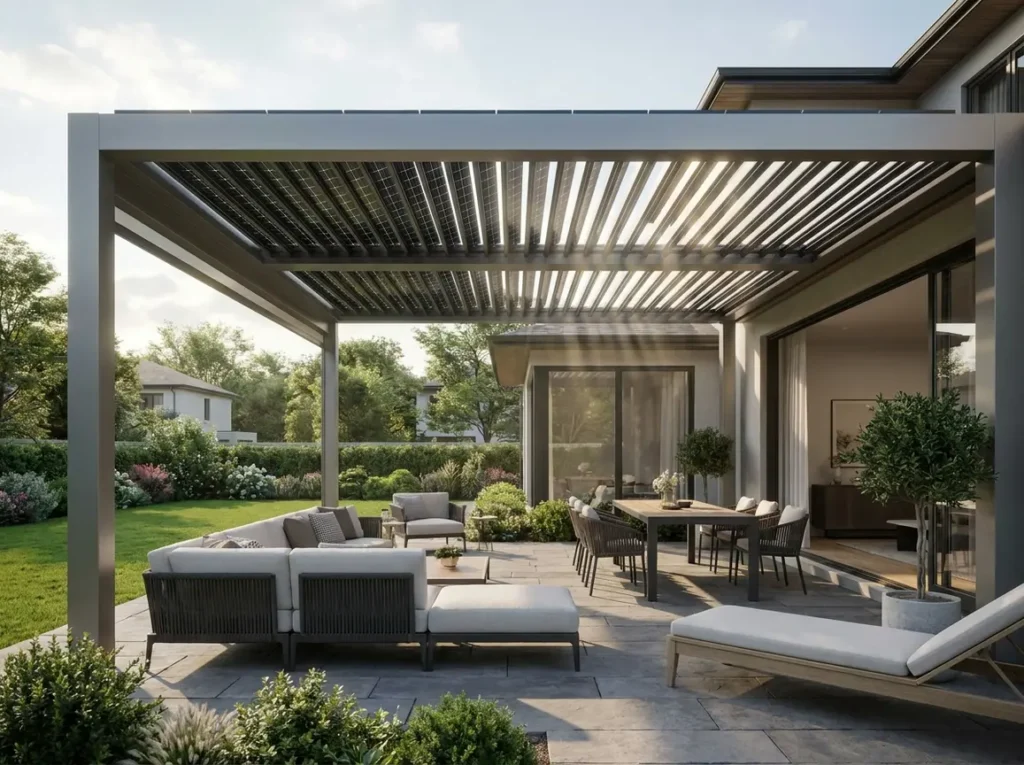
A bioclimatic solar pergola is more than a louvered roof pergola kit or simple shade structure. It typically features:
- Motorized adjustable aluminum louvers (remote or app controlled, with wind and rain sensors for automation)
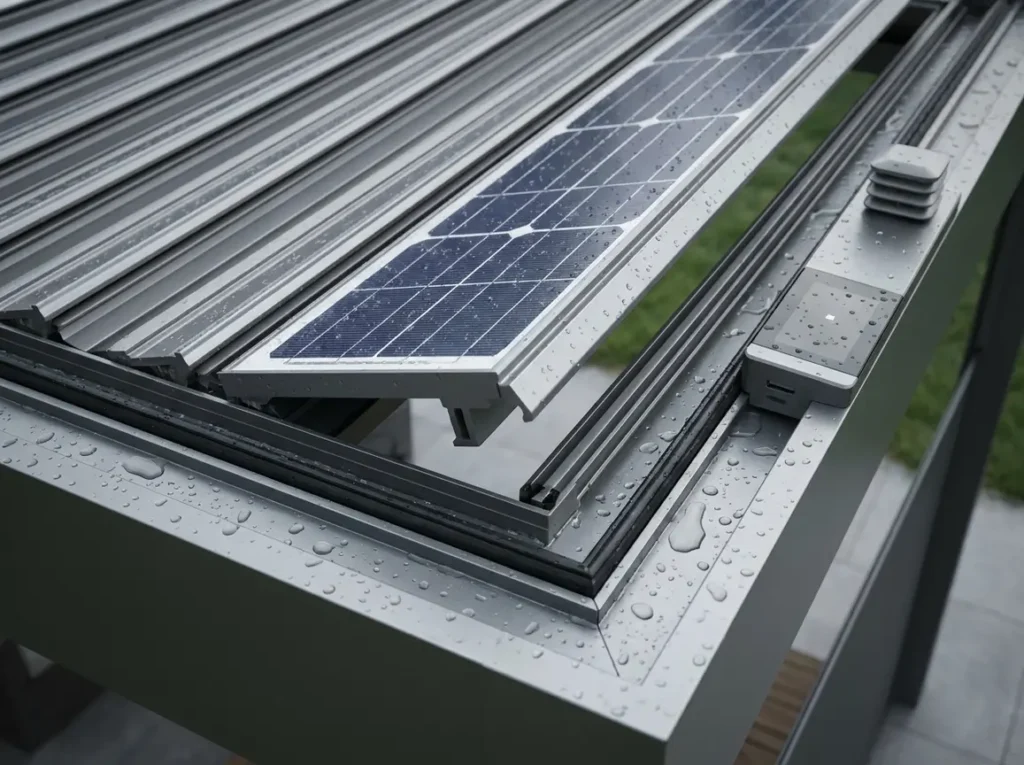
- Integrated solar panels (energy generation built into the roof)
- Smart waterproofing (gasketed joints, controlled drainage, rain detection)
- Compatible with home automation (works with existing smart home devices)
The global motorized aluminum pergola market now surpasses US$3.1 billion, showing mainstream adoption of the core mechanical technology. The addition of solar and climate automation is why bioclimatic solar pergolas command a premium—but also offer genuine year-round utility in climates where a basic louvered roof pergola kit may fall short.
Core Benefits, Real Pain Points, and Common Pitfalls
Key Benefits for Homeowners
- Energy Generation: Solar panel integration means real kWh production, potentially offsetting utility use and lending itself to tax incentives depending on location. Typical yield (for a medium system) can offset a significant portion of outdoor lighting, refrigeration, or even feed back to your home system.
- Dynamic Comfort: Louvers can be adjusted automatically or by app for ideal sun/shade, maximizing outdoor comfort even in high summer or sudden showers. This dynamic “outdoor living bioclimatic shade” exceeds any fixed-roof or static shade solution.
- Property Value Uplift: Premium outdoor structures yield above-average returns at resale, and many reports show bioclimatic systems stand out in competitive real estate markets.
Honest Pain Points to Watch For
- Corrosion at Joint Seals: Premature rust or pitting is common at hardware interfaces, especially in coastal or high-rainfall climates. Even “marine-grade” systems may fail when not regularly cleaned and inspected.
- Water Ingress at Misaligned Louvers: If louvers fail to close completely, water can bypass gaskets and enter the patio area during heavy rain.
- Motor/Sensor Failures: Homeowners frequently report that actuators, sensors, and control modules malfunction in 2–3 years without scheduled maintenance (versus the 30-plus-year life of the main aluminum frame).
- Noisy/Jittery Operation: Poorly lubricated or off-spec actuators cause squealing or stuck louvers—try to witness a live demo before purchase.
- App and Integration Reliability: Smart features are only an upgrade if apps update smoothly, and integration (for example, with Alexa or Google Home) is stable.
Comparison Table: Bioclimatic Solar Pergola vs. Louvered Roof Pergola Kit
| Feature | Bioclimatic Solar Pergola | Louvered Roof Pergola Kit |
|---|---|---|
| Shade Control | Motorised, app/sensor driven louvers | Manual (crank or basic motor) |
| Solar Power | Integrated high-efficiency panels | None |
| Waterproofing | Engineered drainage and gaskets | Basic seals (risk of leaks in driving rain) |
| Maintenance | Minimal on frame, moderate for motors/sensors | Low for manual kits; moderate for cheap motors |
| Expected Lifespan | >30 years frame, 2–7 years for motors/electronics | 10–15 years (wood), 20–30 years (aluminum basic kits) |
| Energy Savings/ROI | Real—solar offsets, cooling savings, property value increase | None (unless shading reduces HVAC use) |
| Cost Installed | High (premium product, advanced install) | Medium to Low (DIY or entry-level install) |
Installation Costs, ROI, and Payback
- Installed cost (turnkey): Typically $250–$450+ per square foot for a fully featured bioclimatic solar pergola, depending on panel wattage, louver specs, integration grade, and region.
- Standard louvered roof kit: $60–$180 per square foot; solar and automation are usually not included.
- ROI inputs: Calculating break-even time depends on local solar yields, electricity rates, and property value lift. Aluminum offers a long lifespan (over 30 years), while motors/sensors may need one or more replacements over the same period. Expect ROI in the 8–15 year range for most homeowners, shorter in high-electricity-cost regions.
For detailed home improvement ROI tips, see our Home Improvement Tips Guide.
Critical Specifications to Require Before Buying
- Solar Panel Specs: Confirm rated output/wattage, panel efficiency (aim for ≥20 percent in modern panels), attachment method, and local code compliance.
- Louver/Actuator Performance: Request specs for adjustment range (minimum 0–135 degrees), torque, and decibel rating (quieter is better).
- Waterproofing & Drainage: Demand tested drainage capacity and gutter sizing, and ask about secondary overflows for extreme storms.
- Motors & Electronics: Require documented IP rating (IP65+ for true outdoor use) for all motors, sensors, and control boxes.
- Warranty Terms: Aluminum structure (≥10 years), motors/electronics (≥2–5 years, with extension available), solar panels (≥15–25 years).
- For a broader project checklist, visit our Renovation Checklist.
Mediterranean vs. Non-Mediterranean Climates—Special Considerations
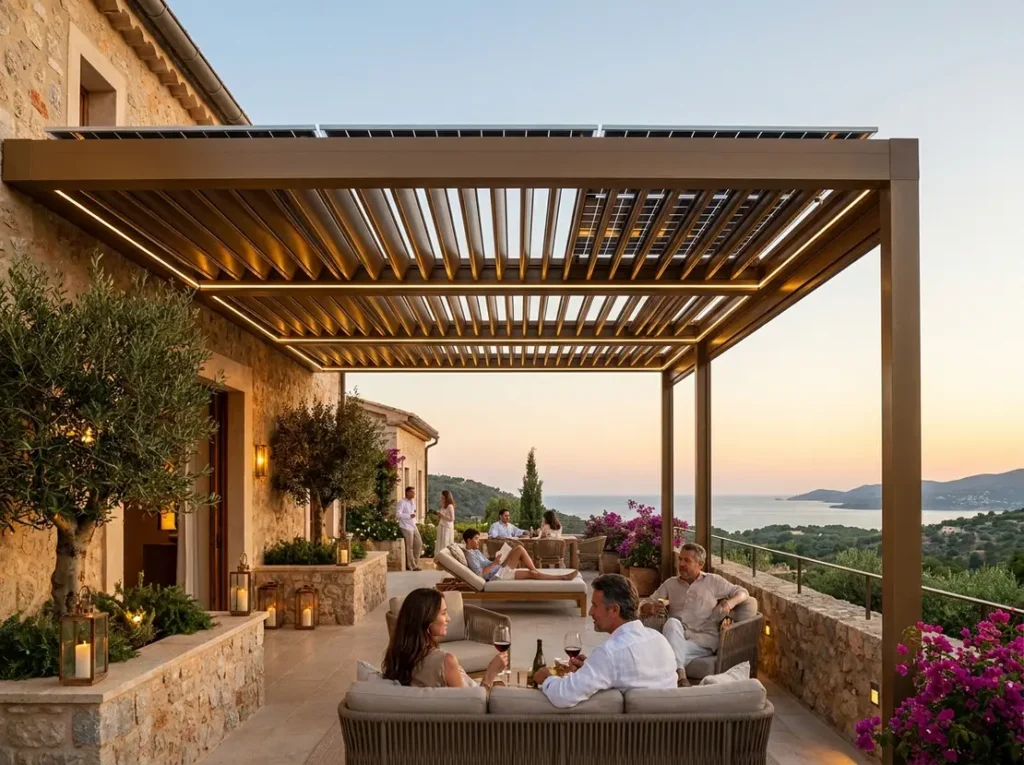
Mediterranean patio pergolas must be engineered for:
- High summer solar angles (optimizing yield and shade)
- Moderate, seasonal rainfall (drainage matters more for narrow rooflines; see our Maximalist Garden Guide for garden compatibility)
- Salt-air corrosion risk (marine-grade finishes, stainless fasteners, and rigorous joint/gasket specs)
Durability concerns—especially corrosion and water ingress—remain top homeowner-reported issues in these zones. That’s why extra attention to coatings, fastener grades, and permitted attachment details is warranted. (For waterproofing inspiration in other spaces, see the Microcement Backsplash Guide.)
Coverage Gaps—Three Mediterranean Issues Most Articles Miss
- Sizing Panels and Louvers for Seasonal Solar and Shade: Select louver angle and solar panel wattage to suit intense, hot summers but mild winter sun. Vendors rarely guide you on this; always demand a climate-adjusted estimate.
- Corrosion Mitigation at the Coast: Only fully powder-coated aluminum extrusions and stainless fasteners with marine-grade gaskets survive a decade or more near salt air. Ask for independent salt-fog test data.
- Permitting & Rainwater Management: Mediterranean-style terraces are often tight, with complex drainage and water discharge rules. Always verify your design meets local code and routes overflow safely.
For wider storage and integration options in small spaces, see our Modular Storage Guide.
Conclusion
The best bioclimatic solar pergola systems blend smart shading, real energy yield, longevity, and weather resilience—but only if you vet every detail before signing a contract. While they outlast and outperform basic louvered roof pergola kits, homeowners should expect higher upfront investment and must insist on rigorous technical documentation, robust warranties, and clear maintenance plans. Ready to claim year-round comfort and future-proof value? Compare detailed quotes, ask for references, and make your bioclimatic solar pergola the centerpiece of your next project.
Take action: Download a comparative checklist, or request a demo from multiple vendors before you commit. For more actionable remodeling advice, dig into our Home Interior Remodeling ROI Guide.
FAQ
How long does a Bioclimatic Solar Pergola typically last?
The structural aluminum frame often lasts 30 years or more, but you should plan to replace motors or sensors every 2–7 years depending on exposure and quality.
Are Bioclimatic Solar Pergolas truly waterproof in heavy rain?
High-end models provide engineered drainage and sealed joints, but leaks can occur at louver edges if seals degrade, motors jam, or installers cut corners. Always confirm drainage testing and inspect real-world references.
What is the realistic payback period?
Most homeowners reach ROI after 8–15 years, depending on energy savings, electricity rates, and repair costs for motors/sensors. Solar-heavy zones reach payback faster.
What are the biggest maintenance needs?
Routine: cleaning louvers, confirming drainage, lubricating moving parts, and updating app/firmware. Major: possible replacement of actuators or sensors as they age.
How do I know if a vendor’s waterproof garden pergola is right for Mediterranean climates?
Ask for climate-specific material specs (powder coating, stainless fasteners) and proof of salt spray/corrosion test results. Requirements are tougher near coastlines.