

Acoustic Slat Wood Wall Panels have quickly become a go-to upgrade for homeowners seeking a refined look and a real boost to room acoustics. Whether you’re updating a living area or home office, these panels offer sound treatment, tasteful design, and a high-end finish—if you sidestep the most common buyer mistakes.
Key Takeaways
- Acoustic slat wood wall panels can transform both the sound and visual style of a room, but deliver mostly acoustic treatment—not true soundproofing.
- Installation demands precision: leveling, secure fixing, and accurate measuring are where most DIYers have issues.
- Panel costs are firmly in the premium bracket—always factor in tools, shipping, and possible pro install fees to avoid surprises.
- Quick Market Snapshot — Why now is a good time to buy
- What are acoustic slat wood wall panels? Types & finishes explained
- How they work: Acoustic metrics every buyer must understand
- Measurable effectiveness: What dB reductions to expect
- Common homeowner complaints & pitfalls to avoid
- Installation requirements, tools, and real-world timelines (DIY vs pro)
- Cost guide — what to expect for DIY kits, luxury oak slats, and felt-backed panels
- Head-to-head: Slat panels vs foam panels, heavy drapes, and traditional timber cladding
- Sustainability, sourcing, and finishes — what to ask suppliers
- Three critical, under-covered buyer topics to include in your decision process
- Actionable buying checklist & quick installer brief (one-page printable)
- Next steps & recommended resources to cite in the article
- FAQs
Quick Market Snapshot — Why now is a good time to buy
The global market for acoustic slat wood wall panels is reaching maturity, valued around $2.3 billion in 2024, according to DataIntelo. In North America alone, sales topped $200 million and are projected to keep growing at about 6% annually into the next decade. Major brands like Armstrong are expanding offerings, launching new FSC-certified skus, and improving distribution. Selection—and bargaining power for buyers—has never been better.
What are acoustic slat wood wall panels? Types & finishes explained
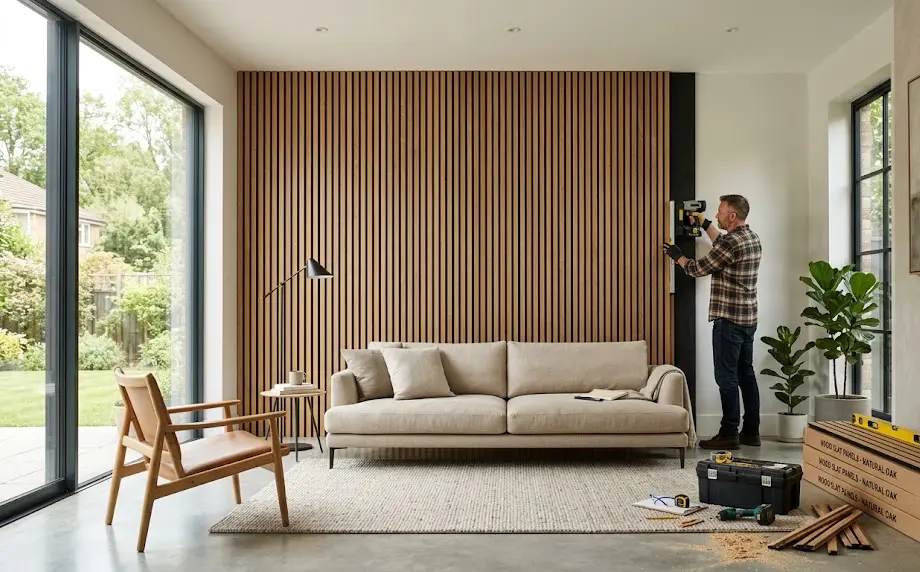
At their core, acoustic slat wood wall panels are decorative arrays of timber strips, typically installed against a sound-absorbing backing (often black felt or recycled PET). The slatted front can be smooth, fluted, or even made of premium woods like solid oak—for a luxury oak slat wall look. These panels range from DIY-friendly “akupanel” kits (pre-attached slats on felt) to custom framed units for whole-room applications.
Popular types include:
- Fluted wood wall panels: Vertical grooves or ridges, now a staple in both commercial and residential design.
- Luxury oak slat wall: Real wood, often with clear, matte, or rich-stained finishes.
- Felt-backed slats: Slats pre-mounted to black or gray acoustic felt, simplifying installation and boosting sound absorption.
- Pre-framed kits: “Akupanel DIY kits” arrive ready to install, speeding up project timelines.
Finish choice affects look, touch, and daily durability, with matte oiled woods showing fewer fingerprints and high-gloss veneers offering easier cleaning. Armstrong’s recent investments in FSC-certified options point to a broadening range of eco-friendly, commercial-grade products for homes.
How they work: Acoustic metrics every buyer must understand
Acoustic timber cladding like slat panels works primarily by controlling reverberation—echoes that muddy up music, conversation, and home office calls. The big numbers to know:
- NRC (Noise Reduction Coefficient): Measures how much sound energy is absorbed. Panels with NRC 0.6–0.9 perform well for most living spaces.
- Absorption curve: Shows which frequencies are absorbed best. Most slat systems tame mids and highs; bass is harder to control without special core materials.
- STC (Sound Transmission Class): Rates how much noise is blocked. Standard slatted panels provide limited sound blocking, so don’t expect major reductions in outside noise.
Felt backing and panel depth boost NRC but do not significantly improve soundproofing. If you need soundproof wood wall paneling (blocking external noise), you’ll need heavy, multi-layered wall systems (see this guide for more on that difference).
Measurable effectiveness: What dB reductions to expect
Most acoustic felt backing slats on the market today claim strong reductions in room reverberation—think clearer dialogue, tamer music, less echoey video calls. In independent and manufacturer tests, that usually means cutting reverb time in half for a treated room. However, dB reductions for transmitted noise (coming in from outside) are modest—1-3 dB at best for a basic panel, as these systems simply don’t block substantial airborne noise unless paired with additional heavy barriers.
If you need to reduce noise transfer, supplement fluted wood wall panels with other solutions—like dense drywall, insulation, or noise-isolating doors.
Common homeowner complaints & pitfalls to avoid
Several pitfalls frequently derail home projects with acoustic slat wood wall panels:
- Panels are heavy and may require studs, anchors, or specialty clip rails for safe mounting.
- Level installation is challenging—uneven walls quickly translate into visible gaps or wavy rows.
- Panels can be scratched or finished inconsistently; natural wood has color variation.
- High cost for full-room coverage, especially if premium finishes or professional installers are needed.
- Biggest expectation gap: “Soundproof wood wall paneling” actually means acoustic treatment—not outside noise block.
Buyer feedback on akupanel DIY kits and felt-backed slats consistently points to these issues, so plan for shipping delays, precise prep, and robust wall fixing. For more affordable or smaller projects, consider browsing budget home improvement ideas for alternatives.
Installation requirements, tools, and real-world timelines (DIY vs pro)
For a clean install, prep and the right tools matter far more than speed. Here’s what you’ll need for modern akupanel DIY kits and similar systems:
- Laser level: For straight lines across the wall—critical for a seamless look.
- Stud finder & anchors: To hit wood framing, or use wall anchors on drywall/masonry.
- Screw gun or drill: Auto-feed recommended for multiple panels.
- Clip or track rail system: Most pro systems use these for hidden, secure fixing.
- Spacers: Ensure consistent gap and alignment between each section.
- High-grip adhesive: May speed up installation on flat, smooth walls—but never skip mechanical fixing for heavy panels.
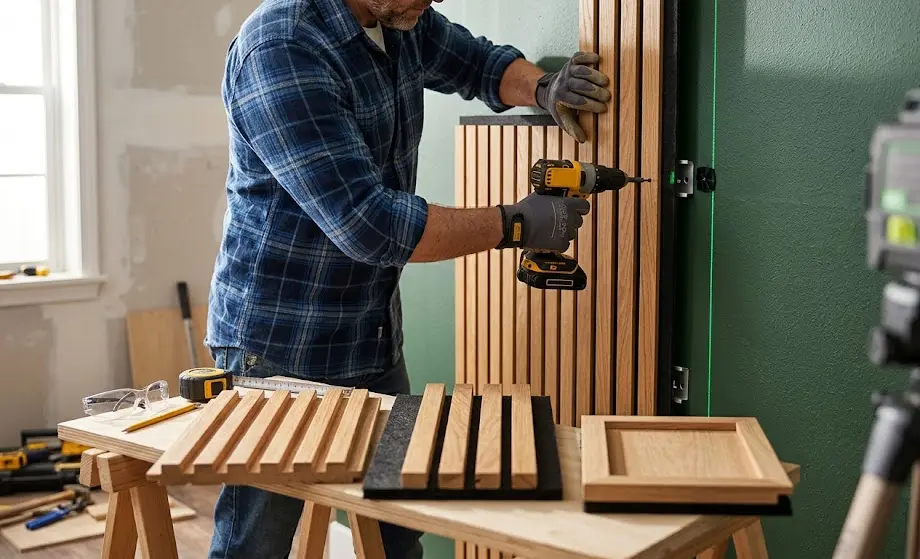
Time needed: For a single accent wall (10-12 feet), experienced DIYers spend 3-6 hours (including prep), while pros average 2-3 hours. Whole-room coverage and challenging wall/floor conditions can double or triple that time investment.
For further improvement tips, see our complete guide to home improvement tips.
Cost guide — what to expect for DIY kits, luxury oak slats, and felt-backed panels
Pricing for acoustic slat wood wall panels is at the high end of decorative wall products. Set your budget with these realities in mind:
- DIY kits (akupanel style): $200-$450 per panel (7-10 sq.ft.)—plus shipping, tax, and extra fasteners.
- Luxury oak slat wall systems: $60–$100 per sq. ft. for fully framed, select-grade timbers or engineered solutions.
- Felt-backed panels: Slightly more affordable, but shipping for bulky items can significantly inflate costs for US buyers.
Remember to add the price of tools if you’re not already stocked, plus specialized mounting hardware (clip rails or hidden brackets). Professional installation typically runs $10–$20/sq.ft. on top of materials. While the exact average kit price is tough to pin down, the $2.3B global market and recurring buyer concerns confirm slat panels fall in the “premium” bracket for architectural upgrades (source).
Shopping in-store? Compare with local home centers—see is Home Depot open today for store details. Or check Lowe’s Home Improvement for in-stock alternatives.
Head-to-head: Slat panels vs foam panels, heavy drapes, and traditional timber cladding
| Solution | Price Range | Aesthetics | Reverberation Control | Sound Blocking | Install Complexity | Durability |
|---|---|---|---|---|---|---|
| Acoustic Slat Wood Panels | $$–$$$ | High (modern/timber look) | Excellent (mid-high freq) | Low–modest | Medium–high | Good (with quality finish) |
| Foam Panels | $–$$ | Low (studio vibe) | Decent–excellent | Very low | Low | Varies (can dent/tear) |
| Heavy Drapes | $–$$ | Medium (depends on decor) | Fair (some absorption) | Low | Low | Moderate |
| Timber Cladding (no felt) | $$–$$$ | High (natural/architectural) | Poor | Poor | High | Good |
This aligns with market research noting timber slats’ standout reverberation control but limited isolation. For a full breakdown, see this acoustic market insights report.
Sustainability, sourcing, and finishes — what to ask suppliers
For health, resale value, and peace of mind, buyers should:
- Ask for FSC certification—ensures wood is responsibly sourced.
- Look for low-VOC finishes to preserve indoor air quality.
- Consider recycled felt or reclaimed wood in eco-conscious homes.
- Request documentation on lifecycle impacts (carbon footprint, recyclability).
Leading brands like Armstrong are rolling out certified options, meeting LEED and WELL building standards. For eco-driven or allergy-sensitive households, don’t settle for low info—ask for test certificates before buying.
For more green tips, see our limewash paint interior guide or eco-friendly roofing advice.
Three critical, under-covered buyer topics to include in your decision process
Don’t let marketing or aesthetic “wow” take priority over these real decision points:
- Acoustic metrics demystified: Always check for real NRC/STC data, not just “soundproofing” claims. Ask for absorption curves and frequency bands covered.
- Sustainability/certifications: Look past “real wood” marketing—request proof of FSC sourcing, low-VOC topcoats, or third-party ecolabels.
- Installation system details: Know if you’re getting clip-rail, adhesive, hidden brackets, or direct-mount. Ask about substrate types, adjustment options, and included fasteners—serious install frustrations are still common.
Articles from top-ranking competitors often overlook at least one of these, but they are critical to a successful, healthy, and durable project. For more design deep dives, explore our fluted wall panels guide.
Actionable buying checklist & quick installer brief (one-page printable)
- Confirm room measurements (height, length, electrical obstructions, outlets, windows).
- Define your goal: treatment (clarity, echo reduction) vs isolation (sound blocking).
- Order samples (finish, color, core) before full order.
- List all hardware: anchor types, screw length, clip/framing systems—don’t assume included kits fit your walls.
- Consider shipping lead times, tracking, and curbside delivery needs.
- Check for warranty and surface care/repair instructions.
- If your wall is out of level or you lack pro tools, consider hiring a specialist installer.
Many negative reviews come from unrealistic install expectations, so use this checklist as a project “sanity check” before purchase. For more detailed home improvement strategies, read our affordable home upgrade guide.

Next steps & recommended resources to cite in the article
Before you order, discuss the following with any supplier:
- Ask for product datasheets (showing NRC/absorption and STC values), plus any certified laboratory reports.
- Request certificates for FSC, WELL, or other sustainability standards.
- Consult recent market research and independent testing for benchmark data.
Make sure you buy from vendors who are transparent about testing and sourcing—market growth (about 6% CAGR) and the entrance of major suppliers make detailed specs easier to demand.
Found this useful? For other room upgrades, explore our guides on living room decorating with simple upgrades and choosing an accent chair for your new acoustic wall.
FAQs
Are acoustic slat wood wall panels actually soundproof?
No. While they dramatically improve room acoustics and reduce echo (treating internal sound), they do not block outside noise. If true soundproofing is needed, additional heavy wall assemblies are required.
What’s the best way to install panels on uneven walls?
Use furring strips or shims to create a perfectly level mounting surface. Always check for wall bowing or corners out of square before starting.
Can I install these panels myself, or do I need a pro?
Experienced DIYers can handle most accent walls, especially with akupanel DIY kits. However, for full rooms, heavy panels, or uneven walls, a pro is strongly recommended.
How much maintenance do wood slat panels require?
Panels with natural, matte, or oiled finishes need regular dusting and occasional refinishing. Some scratches or dings can be lightly sanded, but high-gloss finishes may require specialized repairs.
Where can I compare in-store and online panel options?
Check major home centers like Home Depot and Lowe’s for sample panels or alternatives. See our overview of Lowe’s Home Improvement for store details, or browse our Home Depot store hours guide.