

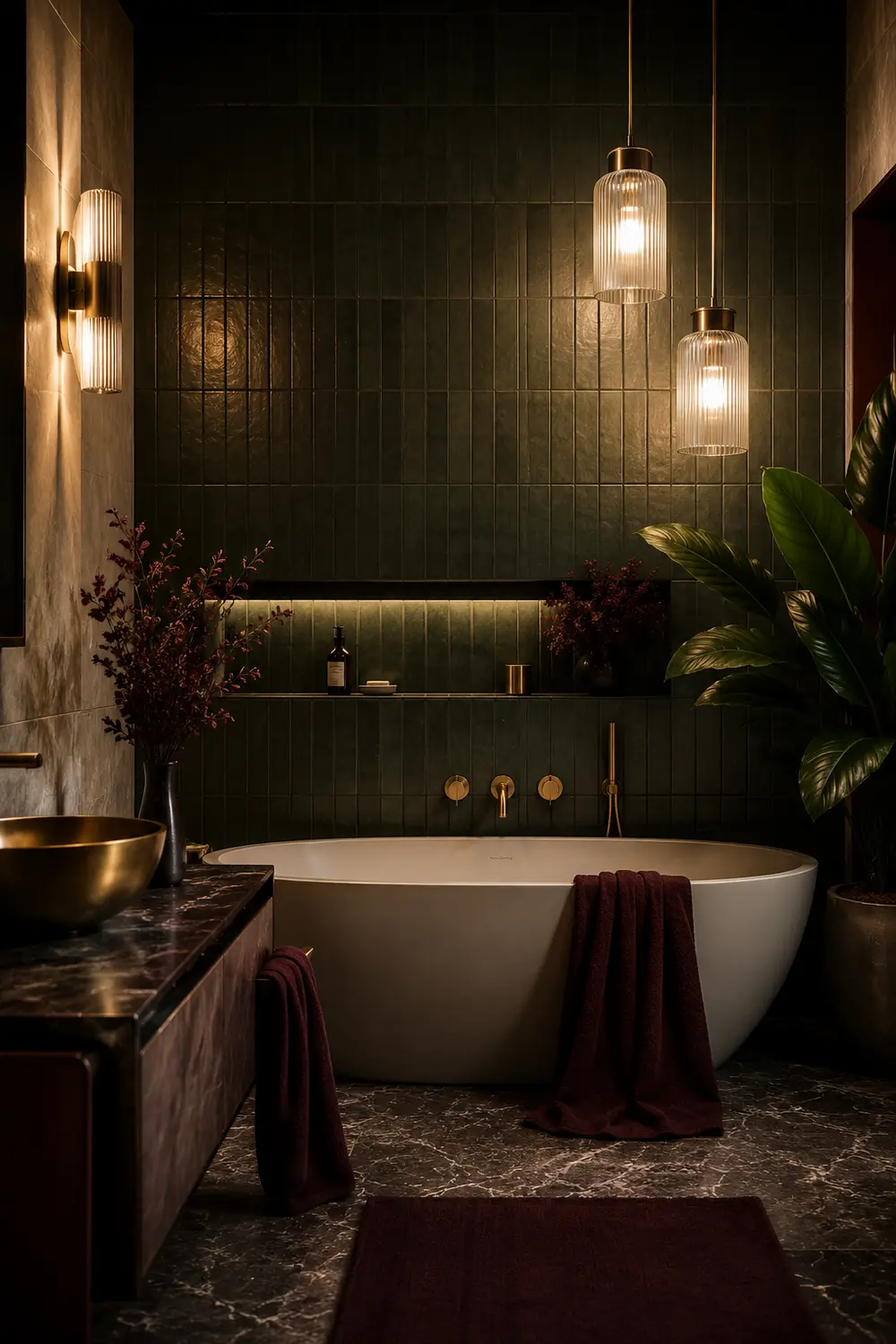
Moody bathroom ideas are reshaping home renovations in 2024, blending dramatic style with must‑know practical details. Before you choose a deep green or charcoal paint, understand what works, what can go wrong, and how to get big impact without headaches over lighting, cost, sourcing, or upkeep.
Key Takeaways
- High-impact moody bathroom palettes (dark green, charcoal, burgundy) create instant drama, especially in powder rooms, but require precise lighting and material pairings.
- Costs are higher for specialty finishes, custom hardware, and layered lighting—budgeting focuses on surfaces and fixtures with the biggest visual payoff per dollar.
- Maintenance and durability are key: dark paints, tile grout, and wallpapers need specific product choices and ongoing care to look fresh.
- Why Moody Bathrooms Are a 2024 Must‑Try
- Best Colors & Finishes — How to Choose
- Lighting, Layout & Sourcing: Pitfalls and Smart Moves
- Conclusion
- FAQ
Why Moody Bathrooms Are a 2024 Must‑Try
Moody bathroom ideas are trending hard: roughly a third of all U.S. bathroom renovations now feature rich, dark palettes, with bold shades like deep forest green, charcoal gray, and wine‑red burgundy dominating designer projects. These dramatic hues are especially popular in powder rooms and guest bathrooms, where a small space lets you take design risks for maximum effect with less commitment—and less expense.
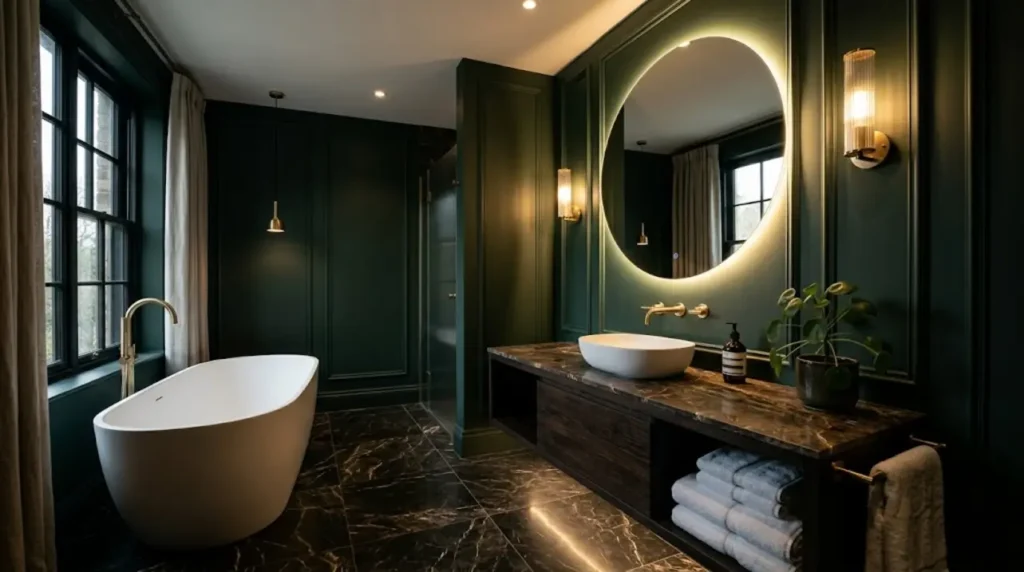
One reason for the surge? Moody palettes offer boutique hotel vibes at home, instantly elevating a once‑forgettable space. According to recent research, dramatic color schemes in bathrooms now generate over $7 billion in annual sales. The approach is as much about lighting, finish, and artwork as it is about color. But there are real pros and cons that many homeowners underestimate—especially around costs, sourcing, and maintenance.
Dark paints, tiles, and dramatic mirrors turn a utilitarian space into a destination. Just remember: what wows on Instagram often doesn’t mention maintenance realities or tricky lighting challenges. This guide will help you make decision-focused choices—no regrets.
Best Colors & Finishes — How to Choose
Choosing the right moody palette is about where, not just what. Deep greens and burgundies suit vanities, accent walls, or cabinetry. Charcoal is classic for walls or shower tiles, but can close in a space if not balanced by reflective finishes and ample lighting.
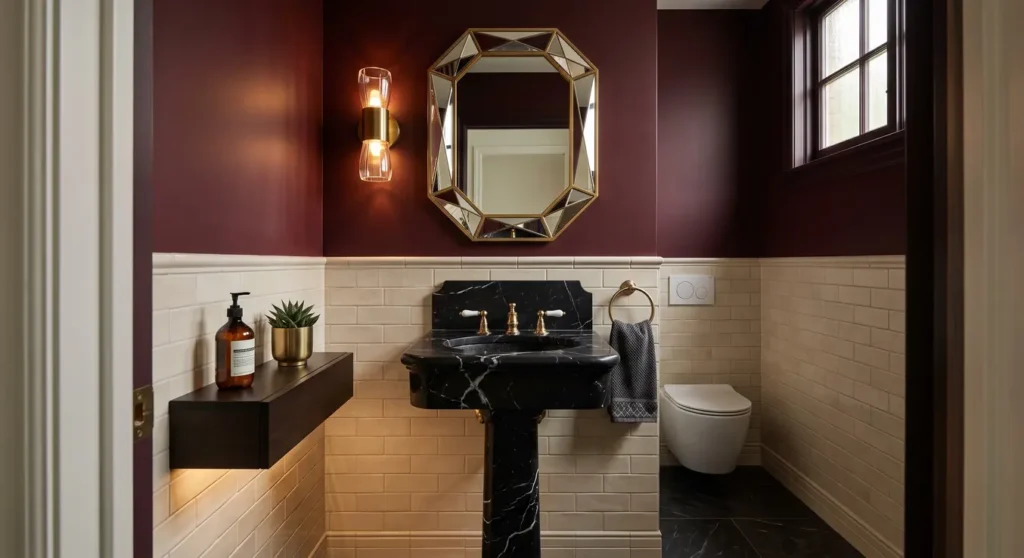
Designers are using matte or low-sheen finishes, textured stone or ceramic tiles, and statement hardware (like brushed brass or oil-rubbed bronze) for depth and visual luxury. For real longevity, avoid pure black that shows watermarks; opt instead for greens, wine reds, or Nero Marquina-style marbled surfaces that conceal everyday splashes and deliver rich texture.
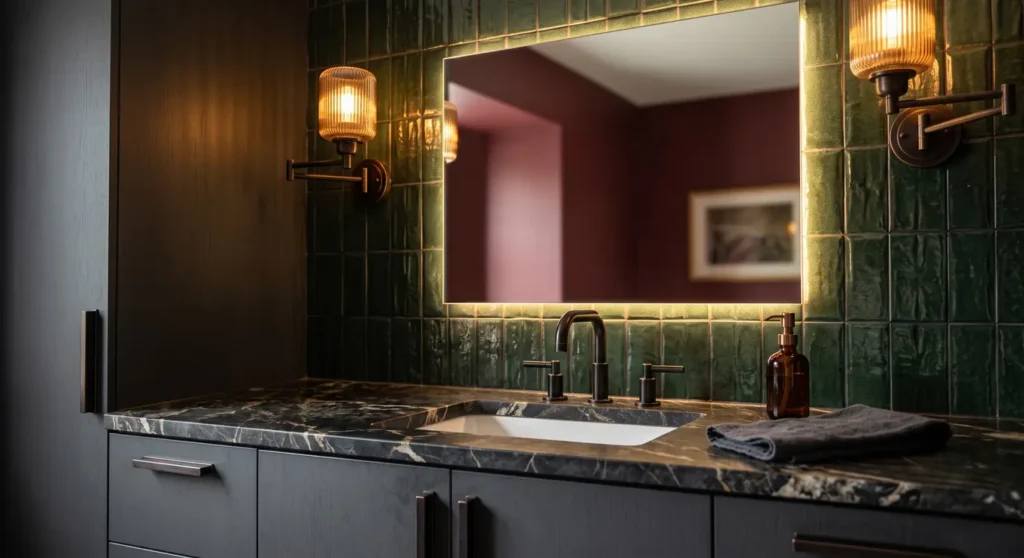
Material selection impacts both appearance and upkeep:
- For dark green bathroom ideas, use low-sheen lacquer cabinets and pair with marble counters.
- Charcoal bathroom walls need high-CRI (color accuracy) layered lighting to avoid looking cold or dingy.
- Burgundy tiles or painted vanities in a moody powder room are less prone to water spots than black, and pair beautifully with unlacquered brass taps.
Accent with textured tiles or stone for depth, and avoid patterns or high-gloss surfaces in tiny spaces, as they can show every fingerprint and require more frequent cleaning.
Lighting, Layout & Sourcing: Pitfalls and Smart Moves
Even the best moody bathroom decor can fall flat without layered, correctly placed lighting. Gloomy, cave-like bathrooms are the number-one complaint—and for good reason. According to design research, most homeowner regrets stem from insufficient or harsh lighting that makes dark walls look drab.
Here’s what matters:
- Ambient lighting (overhead, dimmable) fills the space evenly.
- Task lighting (vertical sconces, backlit mirrors) provides clarity at mirrors and vanities.
- Accent lighting (backlit niches, under-vanity strips) highlights texture and key features.
For powder rooms or moody vintage bathroom updates, use pendant lights or backlit mirrors to add glow without making the room feel smaller. In windowless spaces, paint walls in low-luster finishes (not matte) to reflect more light. Consider adding a simple wall sconce on a dimmer for flexibility.
Sourcing is another barrier: expect limited stock for unique tiles, hardware, and custom color vanities. Many specialty products have 4–8 week lead times and may require trade suppliers or salvage yards for authentic vintage looks.
| Design Element | Pros | Cons | Cost Impact |
|---|---|---|---|
| Dark Paint | Instant drama, affordable | Shows water spots, touch-ups may be visible | Low |
| 3D/Stone Tile | Adds depth, hides marks | Installation is labor-intensive, higher price | Medium–High |
| Brushed Brass Hardware | Luxury and warmth | Can tarnish, requires care | Medium |
| Moisture-Rated Wallpaper | Boutique effect; unique patterns | Needs perfect prep, high humidity risks lifting | Medium |
Don’t forget long-term care—dark walls and tile show dust and limescale, and grout lines can discolor without proper sealing. sealed grout, high-contrast grout colors, and smart venting are the antidotes.
Conclusion
Moody bathroom ideas create spaces that feel private, dramatic, and utterly unique. But getting that effect takes more than grabbing the latest paint color—it’s about pairing depth with good lighting, planning for higher material sourcing costs, and tackling ongoing maintenance.
If you value instant hotel vibes at home, but want to avoid typical pitfalls, start with one accent wall or swap out a mirror and lighting before gutting the whole bathroom. For more cost-effective ideas, see our cheap home improvement projects and home improvement tips. Ready to invest more? Plan your update using our interior remodeling ROI guide or check contractor options for an affordable bathroom remodel near you.
The right moody palette can lift your guest bathroom, powder room, or main bath out of the ordinary—no costly surprises if you design for light, durability, and smart sourcing from the start. Take your next step today.
FAQ
Are moody bathroom colors hard to maintain?
Dark paints show dust, soap residue, and water spots more easily than lighter shades. Use semi-matte paints and regularly clean tile and fixtures. Sealed grout and vented fans help reduce visible buildup.
Which lighting works best in a moody bathroom?
Layered lighting is a must: combine ambient, task, and accent lights such as dimmable sconces, pendant lights, and backlit mirrors. Choose warm bulbs (2700–3000K) and aim for high CRI for true-color rendering.
How much does a moody bathroom update cost?
Expect higher material costs for specialty paint, 3D or stone tiles, and custom hardware. Small mood-setting changes (paint, lighting) may cost $500–$2,000, while full remodels can exceed $7,000—mainly due to finishing materials and labor.
Is a moody bathroom a good idea for resale?
Done well, it can add perceived value and a wow factor, especially in powder rooms. However, some buyers prefer lighter palettes, so focus moody schemes in guest baths or spaces where personal taste can shine.
Where can I find unique moody bathroom fixtures?
Check trade-only suppliers, salvage yards, or specialty tile showrooms for vintage or custom elements. Always confirm moisture-resistance and spec lead times—bespoke colors may need 4–8 weeks for delivery.
—
[…] demand continues to climb each year. For more inspiration, see the latest guest bathroom ideas and moody bathroom trend […]
[…] be swayed by jaw-dropping images of hotel lobbies or grand European homes. Look for accent walls (moody bathroom examples), partial tile layouts, and combined materials so you see what works in tight spaces. Tip: Internal […]
[…] or ornate grab bars in antique brass or polished nickel. For more on bathroom style ideas, see moody bathroom ideas and timeless bathroom fixtures […]
[…] For more on balancing upkeep and design, see moody bathroom maintenance tips. […]
[…] Lighting is still the #1 missed opportunity in small bathroom coverage. Get specifics in our dedicated moody bathroom lighting guide. […]
[…] For renovation inspiration that balances practical function and style, see our guides on guest bathroom ideas and moody bathroom ideas. […]